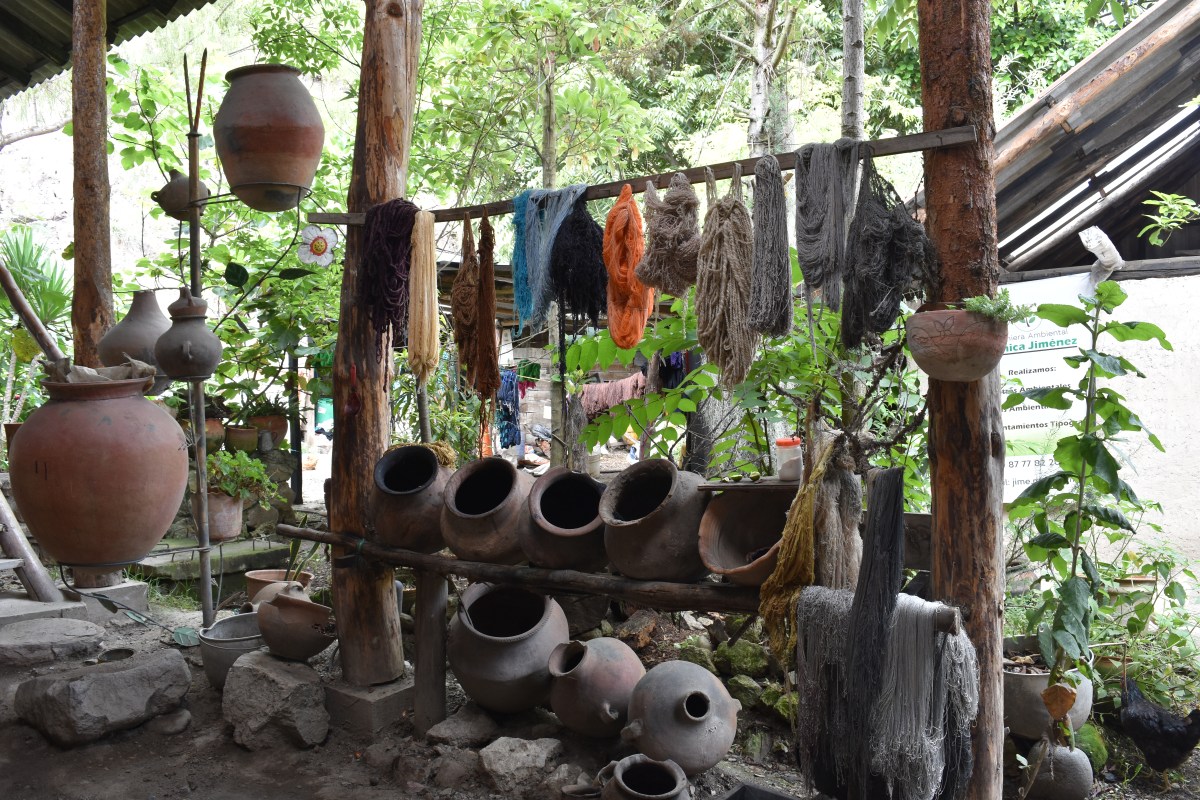
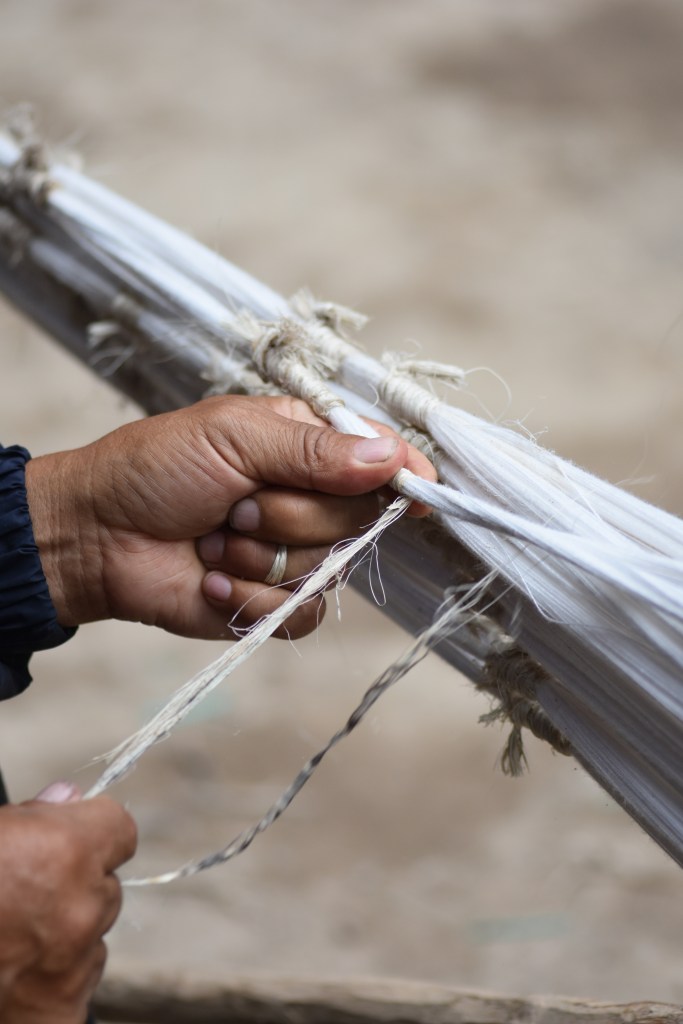
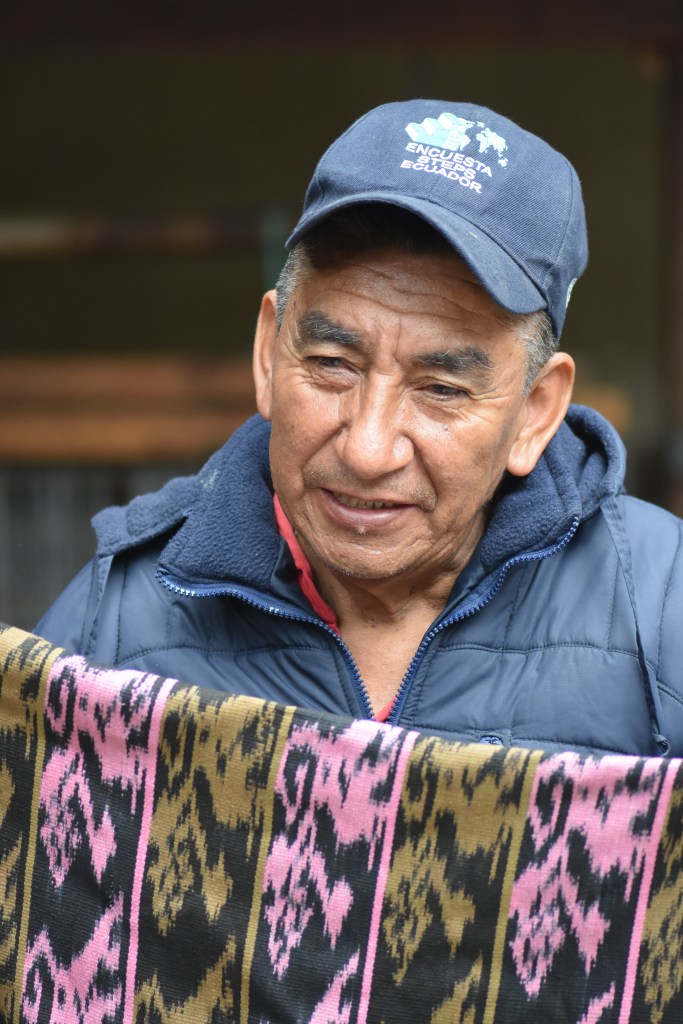
Traveling north out of Cuenca on the Pan American Hwy (side note: nice road) we took a detour away from the highway venturing into a small town, Paute, Ecuador. Brent and Mers wanted to stop at a weaving shop housed in an old building they had come across in earlier travels. We were greeted warmly by the owner, Jose Jimenez who is a descendant of generations of weavers. For a dollar each he took us on a wonderfully interesting tour, explaining the dyeing process and knotting of threads made from the agave plant which assists in the dyeing of the cotton.
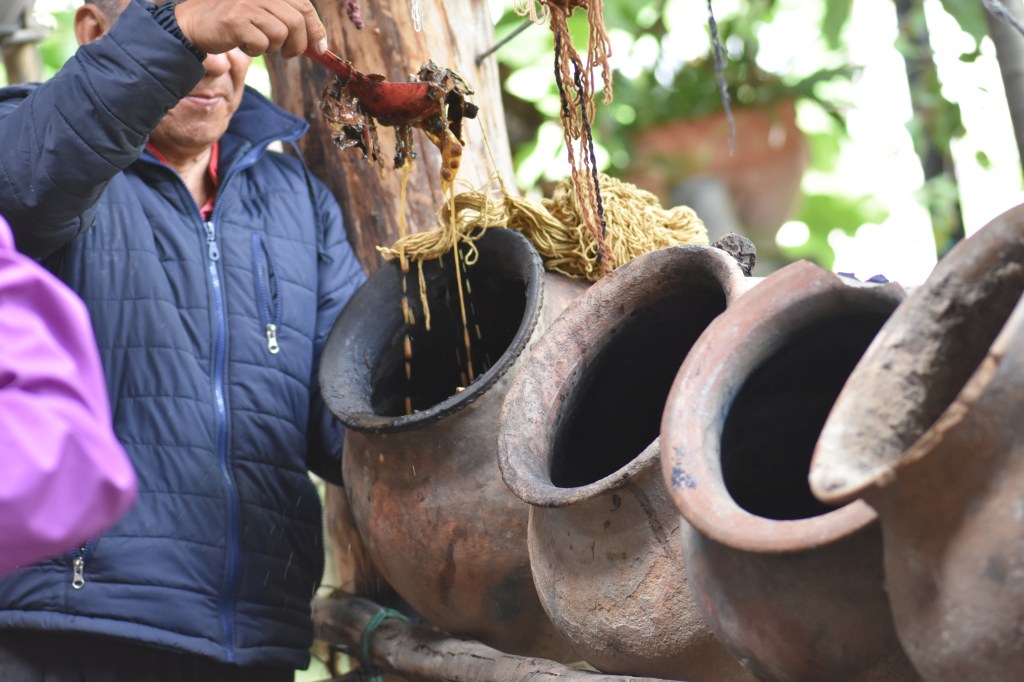
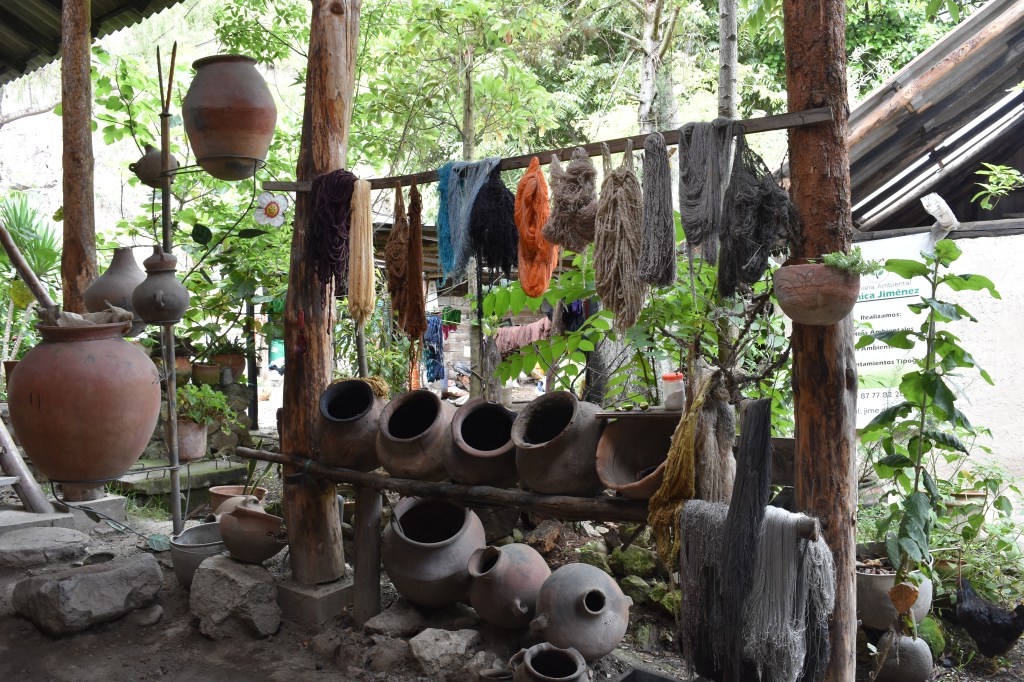
With a wooden spoon that looked older than him (and he wasn’t young), he’d scoop from clay pots dyes made from natural products such as indigo and cochineal insects. He dabbled a little bit of a dye in Brent’s hand then changed the colors a number of times by simply adding ingredients such as salt or a squeeze of lime. It was mind-bending watching a squirt of lime completely change the pigment color.
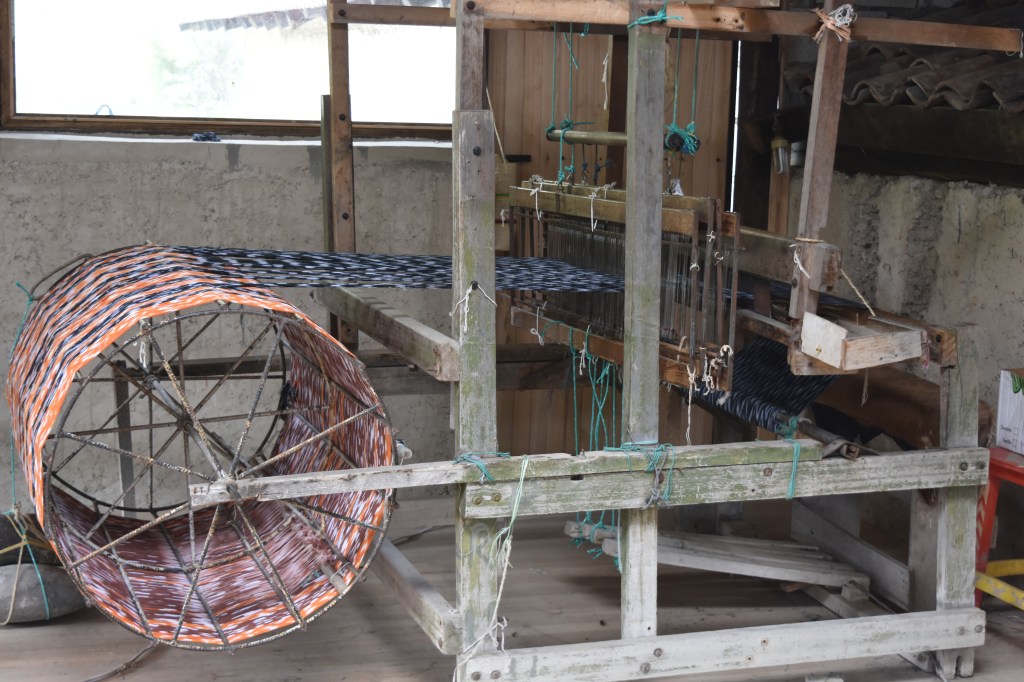
But mostly, I was mesmerized by the old wooden equipment.
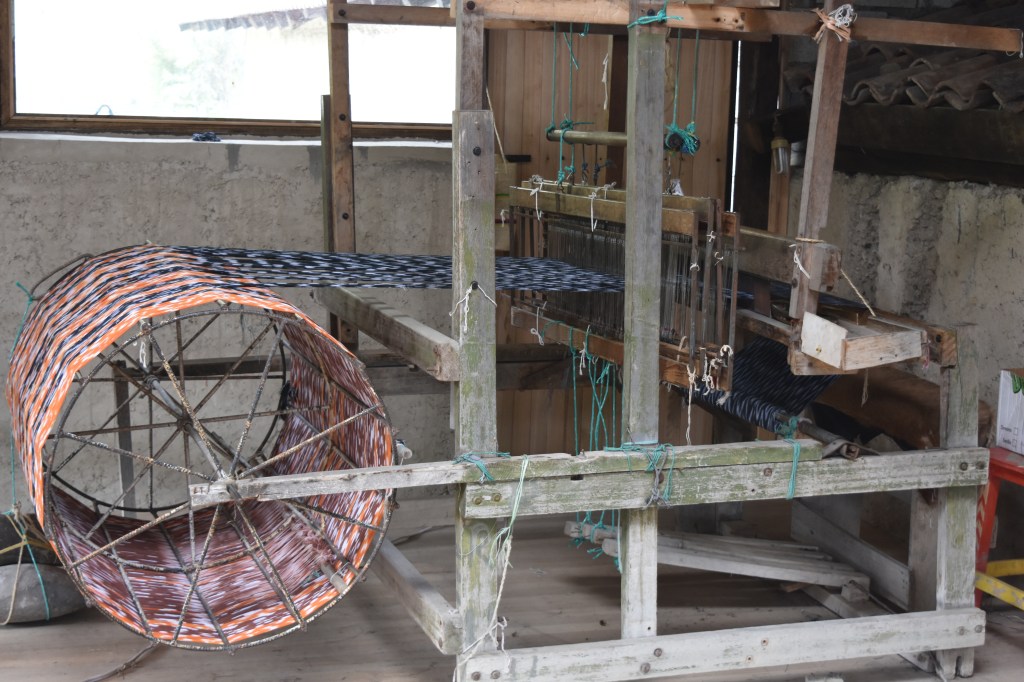
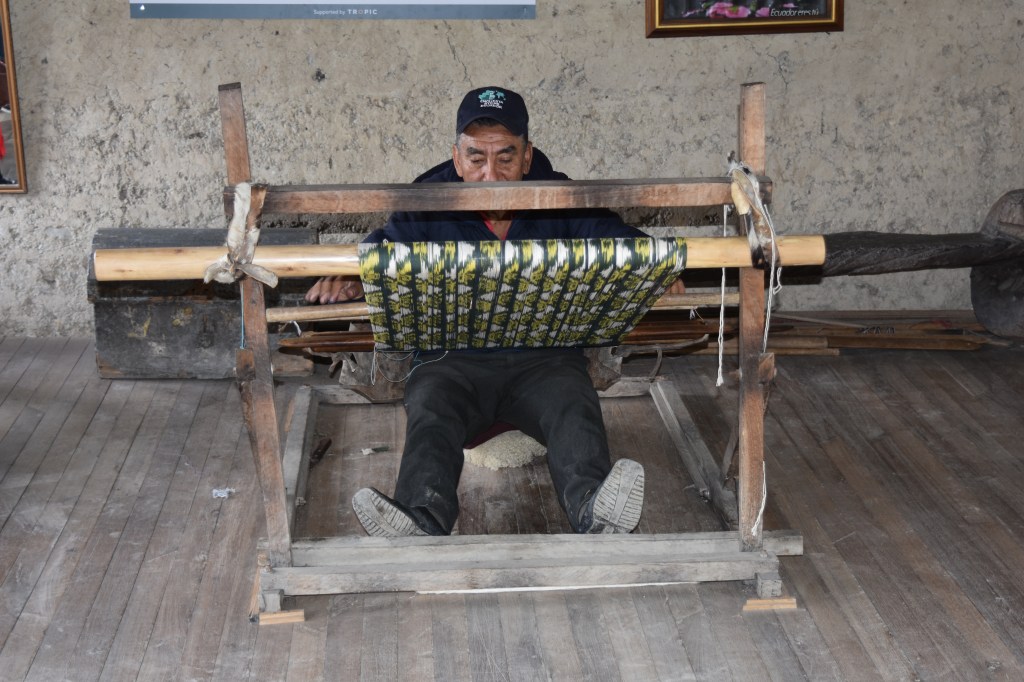
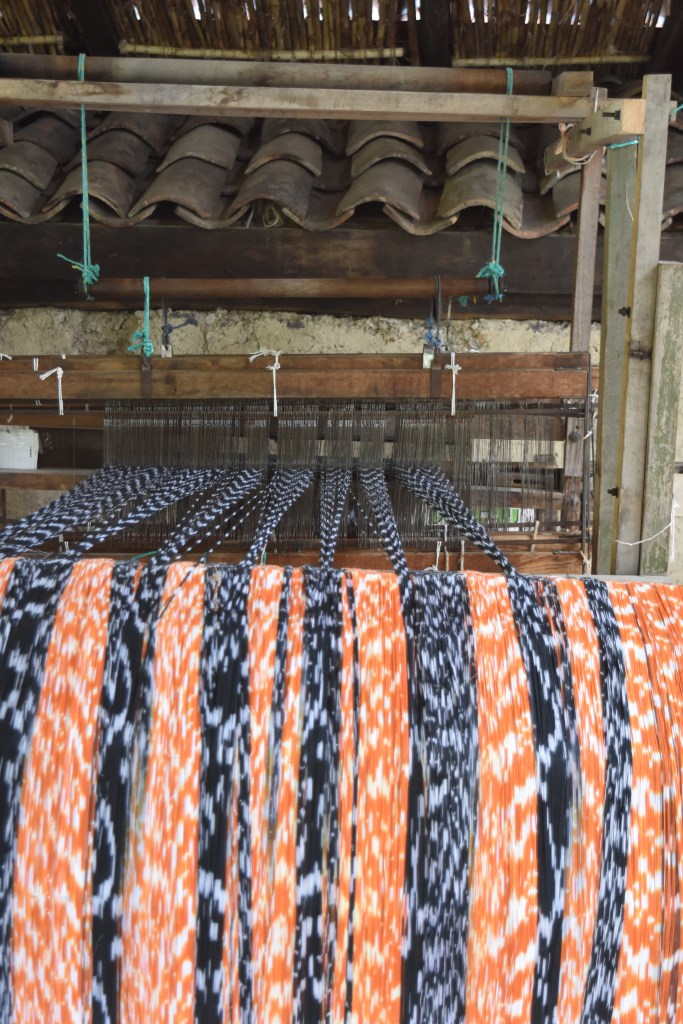
He let us watch him hand weave on equipment that his mother wove shawls on over a 100 years ago. Imagine sitting on a worn spot beveled down into the wooden seat that your mother’s and mother’s mother’s butts sat upon, their back supported by a leather strap with their legs extended pushing against a wood plank that assisted in the movement of the weaving machine. The only power was that of their arms, hands, backs, legs and creative imaginations.
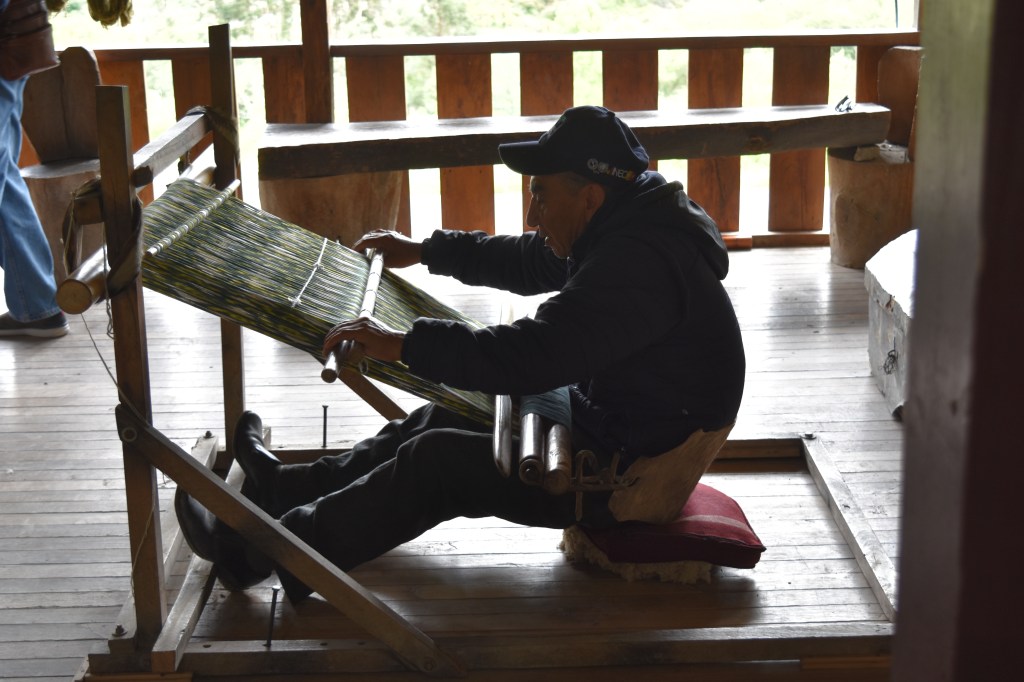
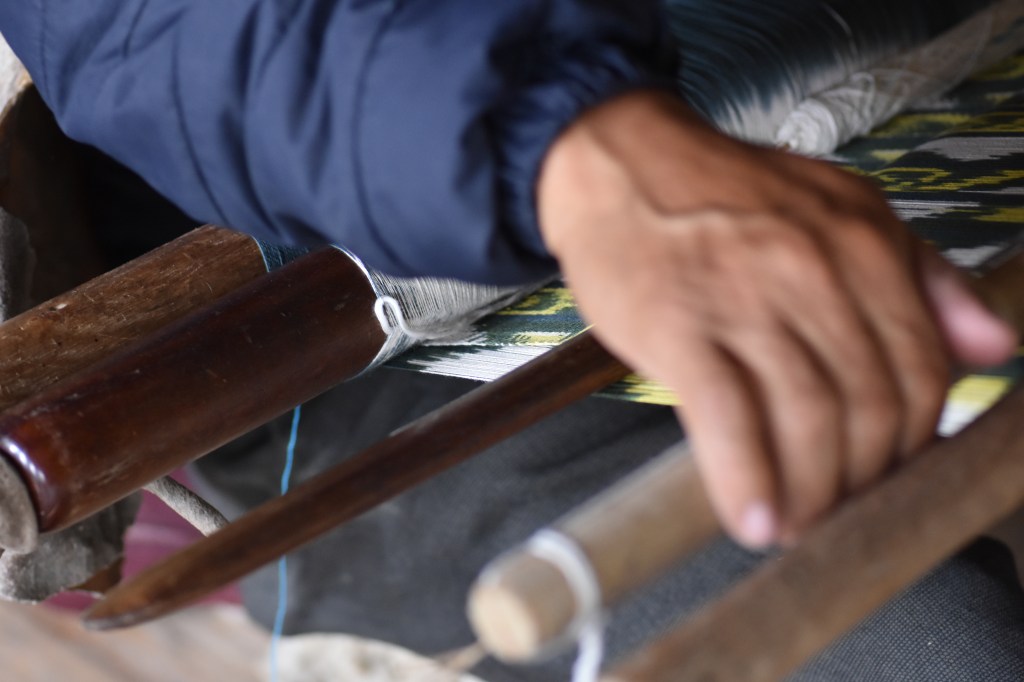
Strand by strand his fingers would thread a large wooden needle (3 ft give or take) through hundreds of other strands creating a tapestry of inflight hummingbirds and butterflies fluttering in a mountain setting. Breathtaking.
 Explorations of an Earlybird