My buddies and I went Marlin fishing yesterday. I had never embarked on a fishing trip quite like this, and my excitement of landing one of these blue beauties kept me, the night before, from a deep sleep where I might have dreamt of glorious battles won between me and beast.
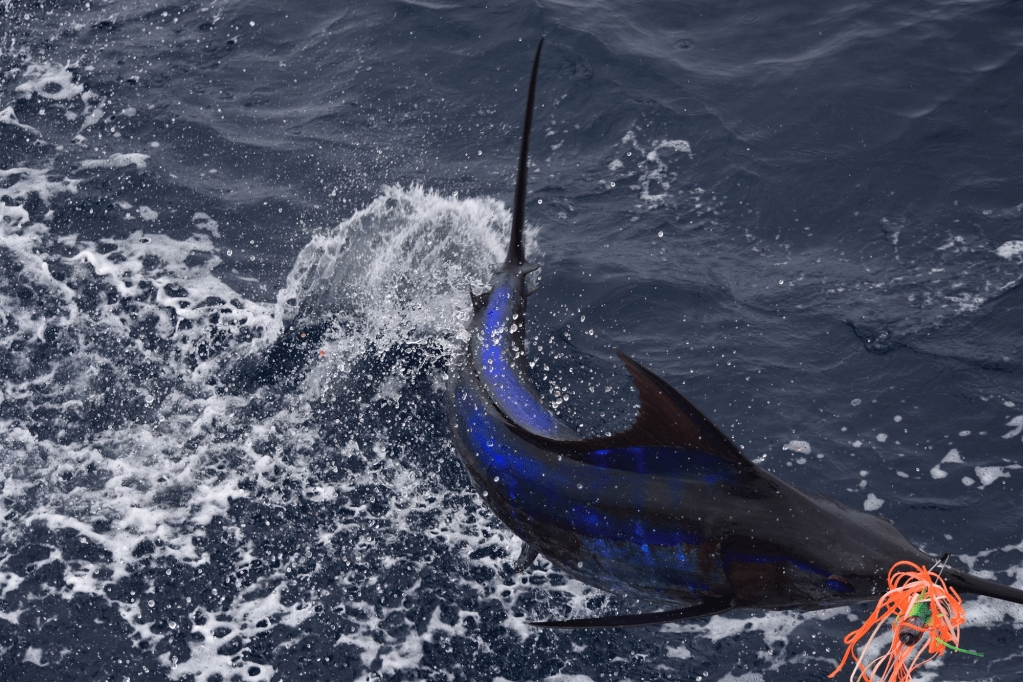
I will admit when the Marlin struck the lure, thrashing out of the water, his head contorting, fighting the hook as his V-shaped tail splashed the surface of the sea in a desperate attempt to break the line free, I was spellbound. And even though it was not my turn at the rod, where I longed to feel the vibration of the fight between life and death, my blood ran hot with excitement. The backspin of the reel meant GAME ON!!!
I grabbed my camera to capture the moment, and I was every bit as engaged in the situation as the person feverishly cranking on the reel as he slowly lowered the rod then smoothly raised it again. The exhilaration in me as I snapped the shutter, freezing in time this magnificent animal’s fate as it threw itself into the air, twisting and contorting, was palpable.
(Before I continue, I believe it honest and important for me to state that I do not believe killing animals in order to survive or even to expand one’s menu beyond vegetables is morally wrong. I do begin to waver though when hurting and then killing another creature for sport is the primary purpose. I understand many individuals believe the killing of animals to be morally wrong and many fine people do not. I even see value in both positions. I wish I could be as confident as those who so mightily have cast their unbreakable line in support of one side or the other, for then I would be unhooked from my moral dilemma.)
At long last, the marlin was overcome by the boat’s engines, the strength of the line and the endurance of the fisherman. For the first time, I was able to view him personally, mere inches from the boat, exhausted, stilled, the sleek finned hunter cowed.
And then I watched in disbelief as the deckhands clubbed this beautiful, sky hued creature over and over until it succumbed.
My heart, soul, mind and instincts began a bitter clash. The hunt had aroused and exposed a part of me to myself. A part that somehow found excitement and pleasure in the kill. But my euphoria was gutted in that moment. Instead of feeling victorious, I was confronted by that side of me that desires to be kind and gentle, to do no harm, and I felt gaffed by the unpleasant view of another side of me and it made my heart bleed.
How should I feel about myself when my dream realized is another creature’s nightmare actualized?
Am I experiencing an awakening, a threshold at a doorway that leads to personal change? Or, am I simply playing “pretend piety”, so I might feel better about myself thus avoiding honest, self-examination that could lead me, if needed, to change?
I can hear the back-spinning of the reel within my mind. GAME ON!!!
With our breakfast gulped down, dishes done, bags packed and armed with high hopes and imagination, we sped away from Macas in search of the Sangay National Park road and the opportunity to spot the explosive activity currently coming from the Sangay Volcano.
(Spoiler alert – our hopes were dashed.)
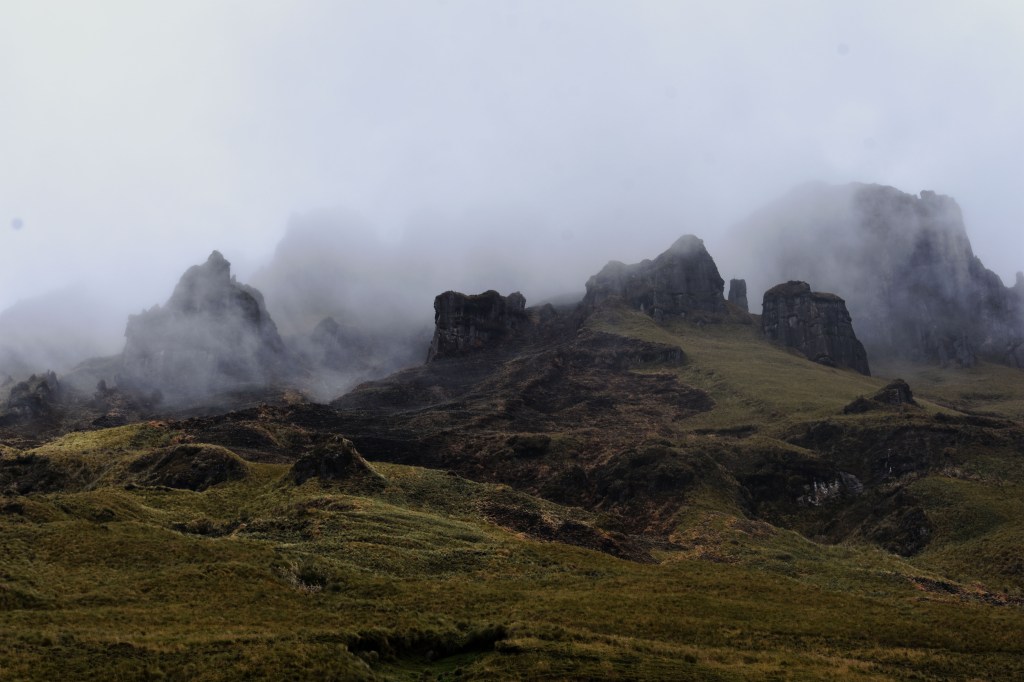
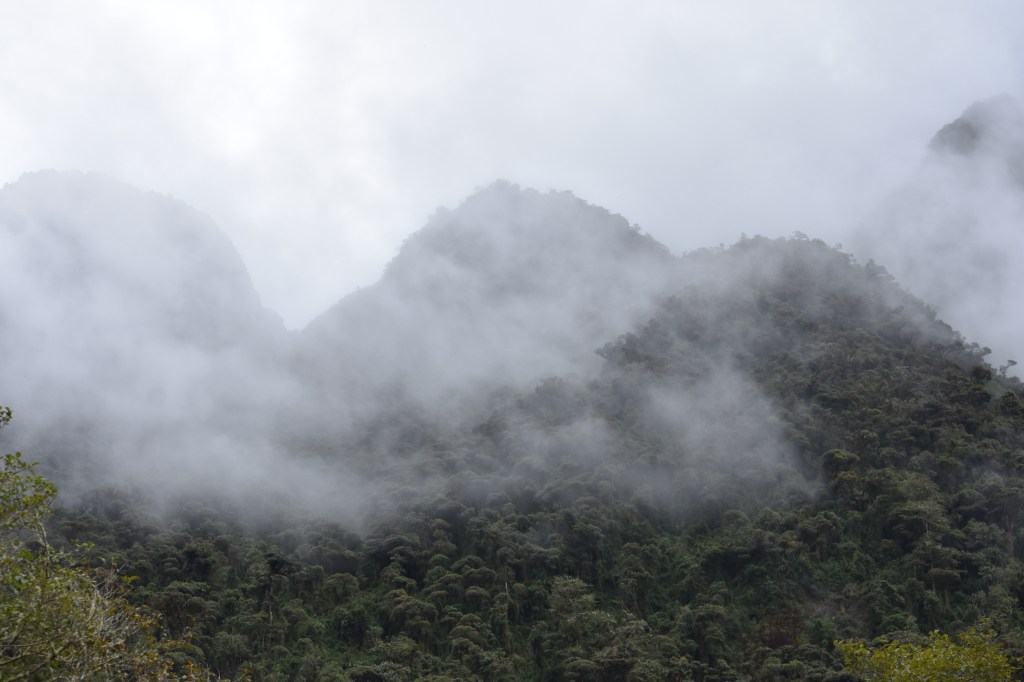
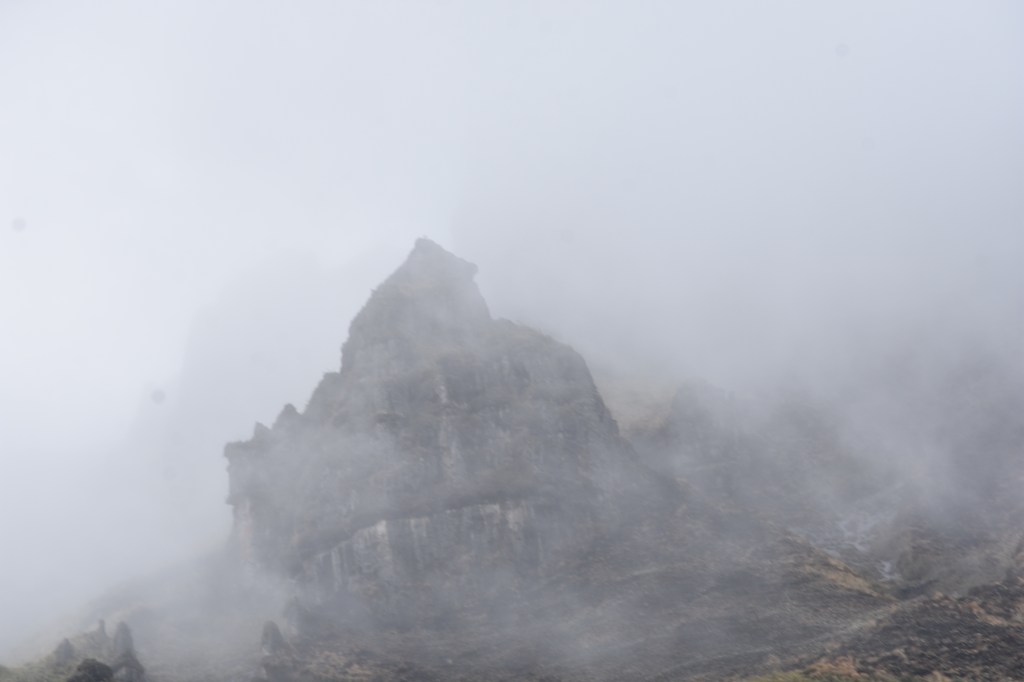
Sadly, we never did have the pleasure of viewing the volcano’s explosive activity. For two days we attempted to find the veiled peak, but unfortunately, the low clouds obscured, like a negligee tease, the glacier from our view. A lamentable loss, yet I never once had a moment to wallow in disappointment.
One might think it was my Pollyanna excitement regarding life’s offerings or the fabulous mountain and valley views that granted us glimpses of the jungle wildlife that overrode any sense of losing out.
But, oh, no, no, no it was not the joy of seeing such an amazing environment. Rather, I was much too overwhelmed by and focused on my instinct for SURVIVAL! And although my mind had conjured up images of jeopardous spewing lava and falling ash, this was not at all the source of this primal response.
So what caused me such deep anxiety? Well, heck, where do I start?
Landslides:
Close your eyes for a moment and visualize driving on a narrow, two lane road where on one side of the pavement the mountain is rising hundreds of feet and on the other side, cliffs fall away so steeply that all one can see are the flowing clouds, creeping over the road eclipsing an emptiness you do not wish to fill.
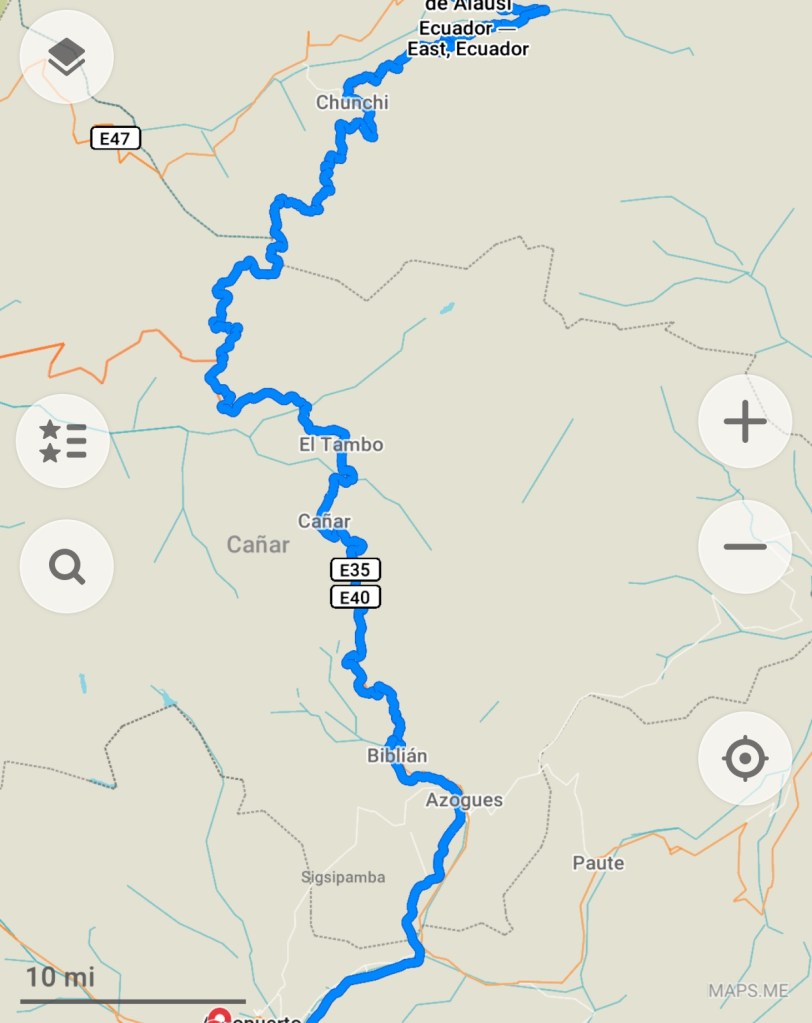
Besides crashing into a ravine, what you are seeing in your mind’s eye is the mountain road traversing from Macas to Alausi.
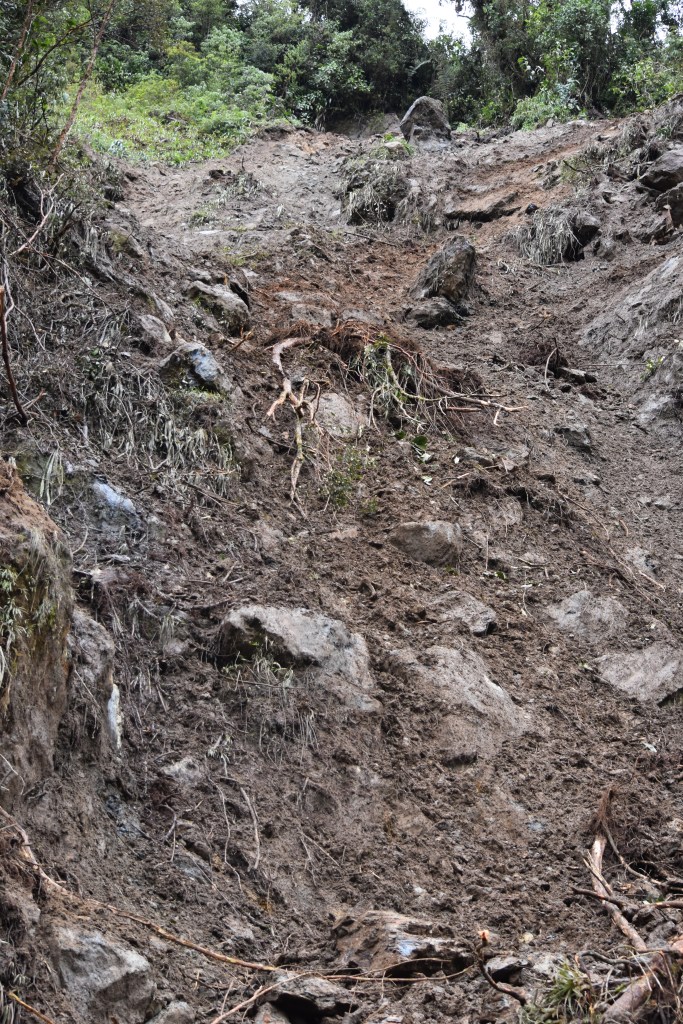
Despite any alarm bells such a road creates, our drive was going smoothly until I began noticing large rocks, 1 to 2 feet in diameter, strewn over the road creating a boulder garden (not unlike those I would encounter when I used to kayak) through which one had to navigate. At first, I was able to ignore the possible dangers, rationalizing that it would take a direct hit to the roof of the truck to cause serious injury. My unfounded reasoning worked well until the “large rocks” morphed into boulders twice the size of our truck! Though more uneasy, I still figured the odds of being directly plowed into was not much different than being eaten by a shark while surfing (which has certainly never dissuaded me from the sport). However, further up the road we were forced to drive around even larger boulders while simultaneously squishing through thick mud, covering both lanes for 100 feet, give or take.
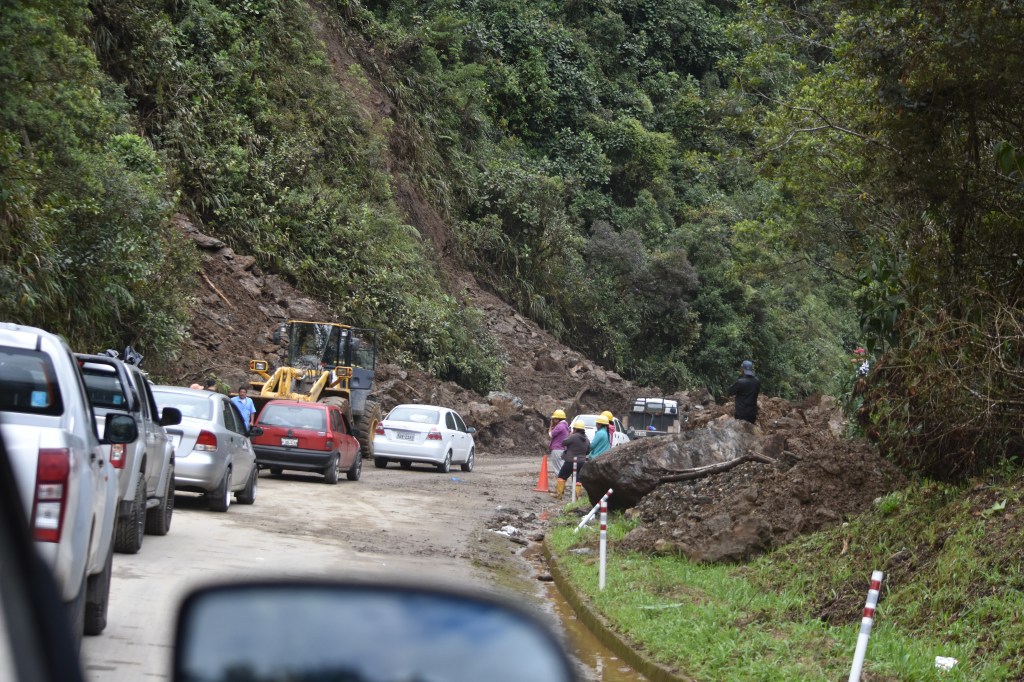
At one point, we had to wait, along with other motorists, about an hour for the highway to be cleared of the debris left behind by a mega landslide that, while on its way to the valley floor, buried the road and anything on it. It began to dawn on me that the odds of not being pushed over the edge by mud, ripped out trees and boulders were becoming more like those of a hot-blooded gambler in Las Vegas taking on the cool headed, house dealer. (In Ecuadorian news just the last two days – a bus crushed by HUGE boulders and a car impaled by a sliding tree. The odds were not in their favor.)
Missing Asphalt:
Until this trip I hadn’t really thought about the fact that landslides do not occur only on the rising walls above the road. Though unseen, they also occur on the underside of the pavement, causing large chunks of the road, 10 to 15 feet in length and 3 to 8 feet in width to fall into an abyss. In some places whole car lanes were missing! I couldn’t help but ponder – was there a motorist with his family, child safely locked in his car seat or bus full of slumbering people on the road when the earth collapsed from beneath the vehicle? Equally as troubling, there is little to no warning of hazards ahead. No bright, red flags or glaring, flashing lights. Nor are there any yellow vested workmen directing traffic flow. Nope, at best you will see a mound of dirt to alert you. And if your vehicle careens over the edge there’ll be no surviving. For if the fall doesn’t kill you (which, trust me, you’ll hope it does), the boulder-filled landslide tombstone which follows will complete the task. Yet even this was nothing compared to what was to come the next day while heading down the other side of the mountain.
Unrelenting, Dense Fog:
Driving in intense fog is nothing new to me. However, doing so when on unfamiliar, twisting asphalt that hovers over a gorge is a recipe for the worst of nightmares. To add to my discomfort, I was a passenger in the back seat, so consequently had no control over the situation. I was in capable hands, but that only granted my mind free time to cogitate on all the hair-raising possibilities.
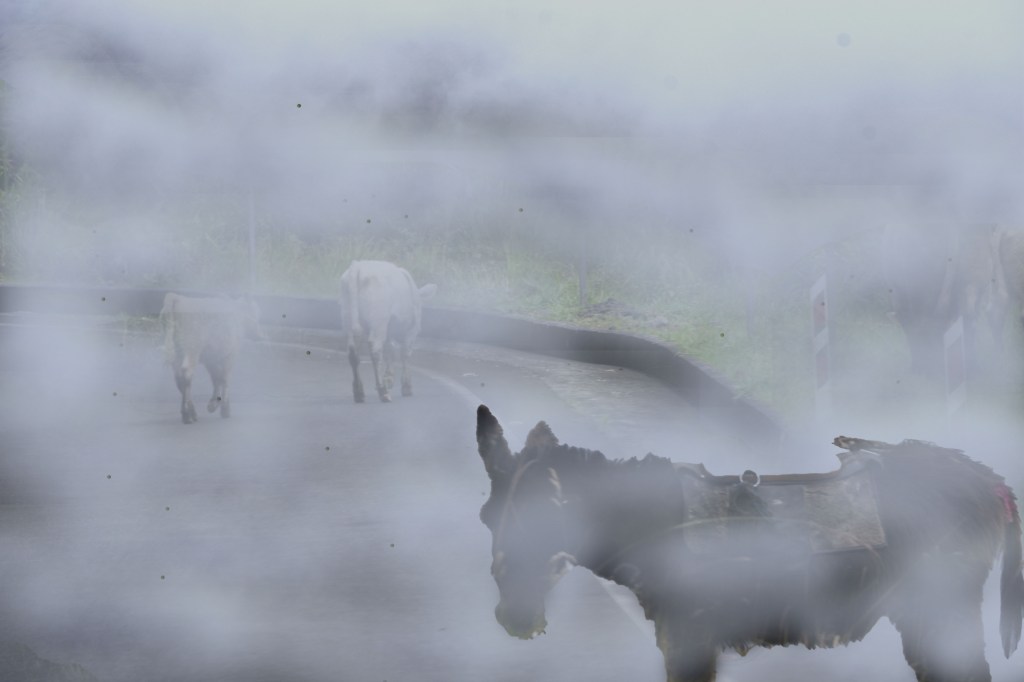
Is there another boulder laying in the middle of the road? A stopped car? A wayward cow or donkey? Or worse, is there even a road at all or has it dropped off leaving nothing but an insatiable cavity?
My angst was nearly overwhelming as the hours of blind driving snaked by. Yet, stone boulders, roaming animals, deer in the headlight drivers, collapsed roads and thick fog were not nearly as scary as the dense-headed drivers, those who showed no restraint or reasonable fear of the blinding fog. They could not see one whit better than we could, yet they’d fly by, driving on the oncoming traffic side of the road as if it were a clear day on a 4-lane divided highway where they could see forever. Hairpin curve? No worries for them – it’s not like they could see it coming. And, so, every few moments there’d be a blur on the driver’s side of the truck as something whooshed by with total disregard for what lay ahead. Unfriggen’ (not the word that was actually screeching through my mind) believable.
Thanks to Brent’s skilled driving, Mercy’s navigational use of Google maps giving pre-warning of upcoming curves, and despite Jan’s yelps and my gasps, we arrived in Cuenca safely unscathed.
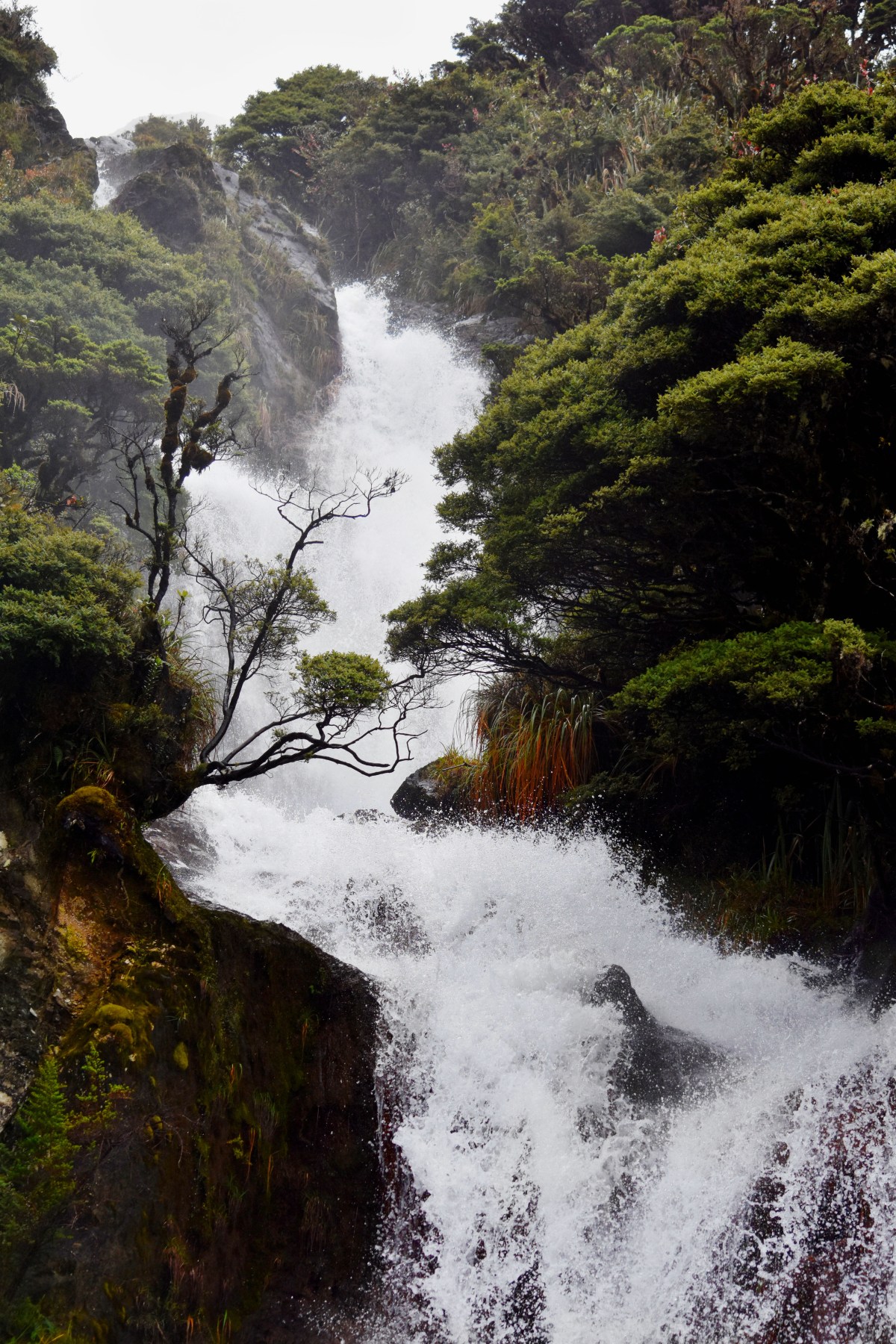
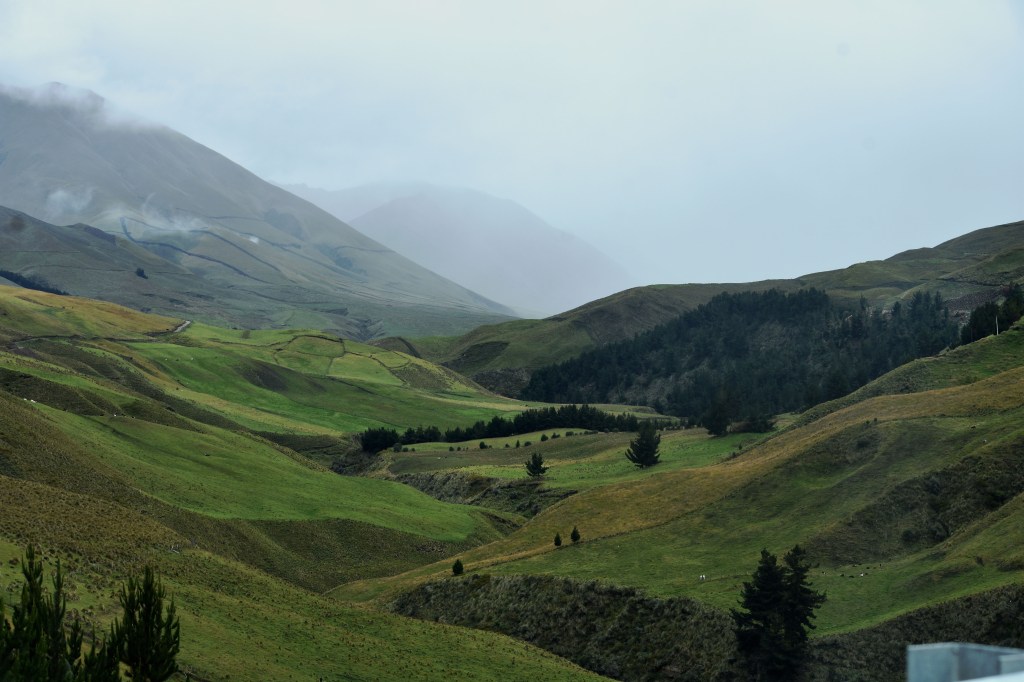
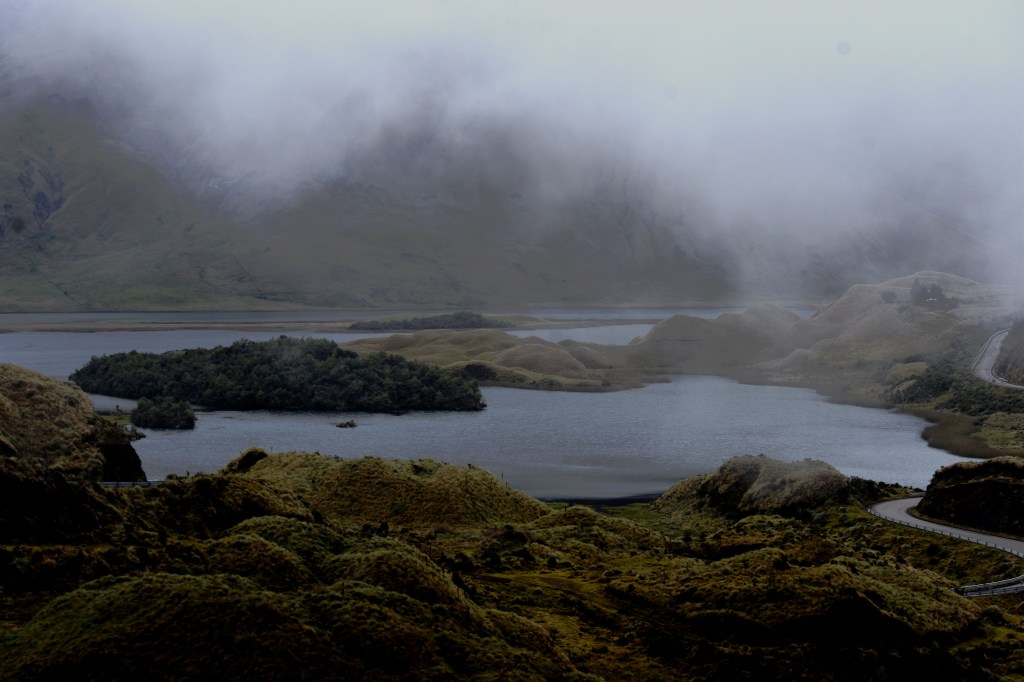
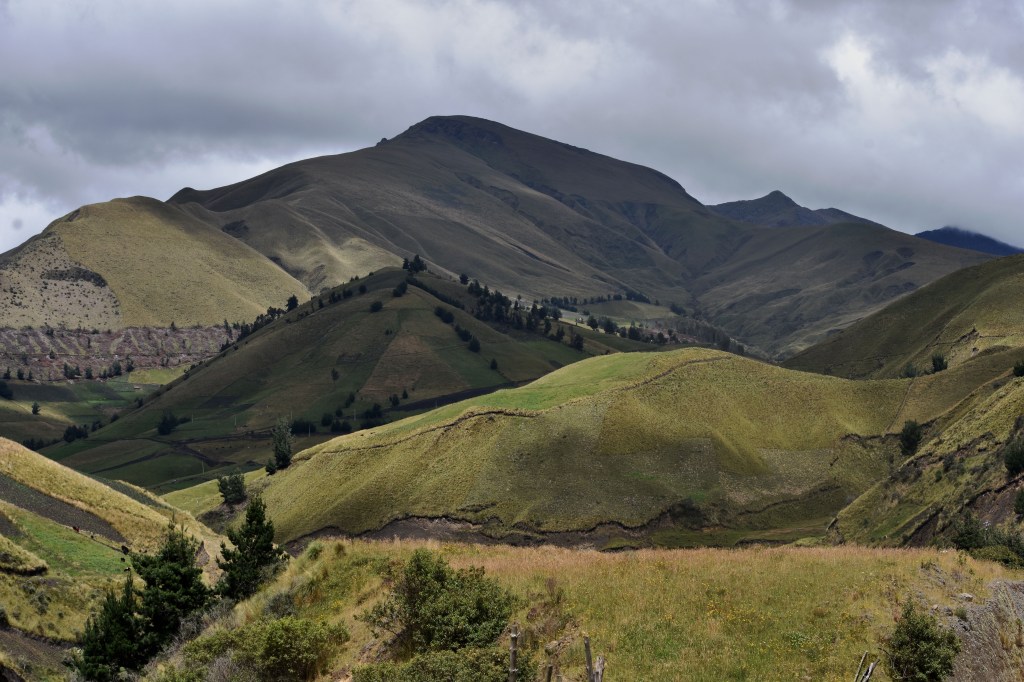
Now, one might surmise from my account that I did not have a fabulous time while traveling through Sangay National Park. This deduction, though completely reasonable, would be in error. Honestly, the views, when we had them, were astounding and outweighed my desire for safety. Sadly, my camera’s lens can’t even come close to representing for you what my eyes beheld: towering walls, intimidating cliffs, colorful birds flittering on limbs of unfamiliar trees and countless waterfalls, their sounds calling me to venture off the road to discover their secretive, quiet pools. It was totally worth the risk
(And if you are still drawn (and I hope you are) to the Sangay National Park, make sure your life insurance is paid up and you’ve made amends with anyone you might have offended.)
This past week, we decided to take a side-trip from our stay in the beautiful city of Cuenca, Ecuador to the town of Macas, our launch point into the Sangay National Park. (I’ll write about that adventure later.) We spent two nights at a secluded home we discovered on Air B&B.
The lodging was more expensive than we’d planned ($170.00 per night for the four of us), but the lovely photos on the internet were intoxicating. We were all drunk with excitement and decided we would splurge on our exotic little getaway..
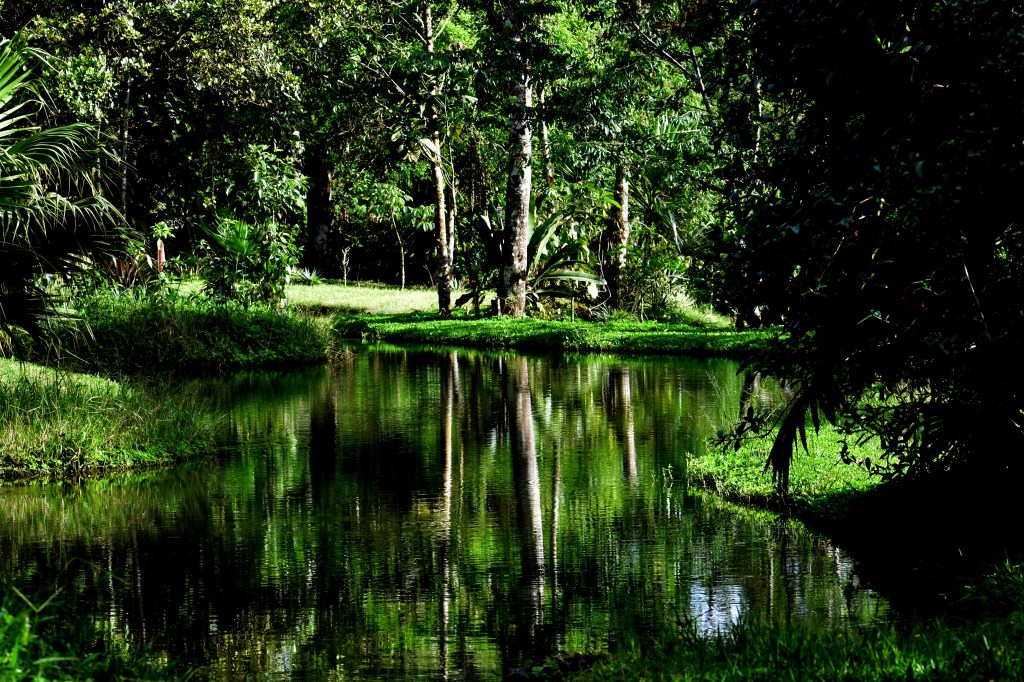
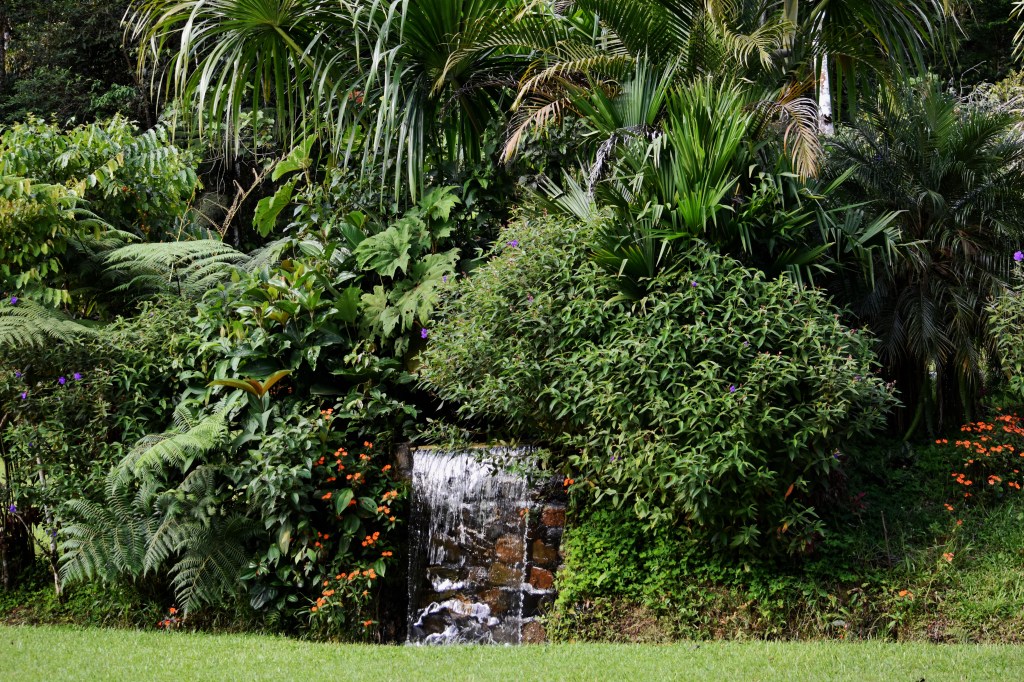
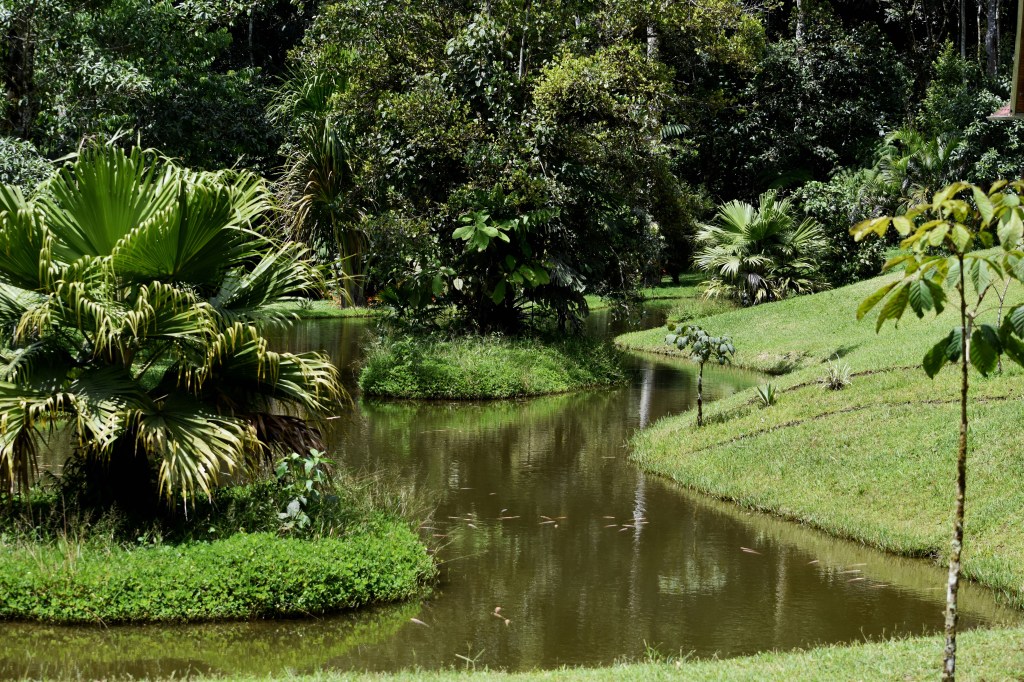
The location, which was 15 minutes out of town, was nestled among the jungle’s trees, offering us total protection from the city lights and noises. (And anyone who has visited Ecuador knows that is an issue.) The manicured grounds, which would humble the nicest of golf courses, were spectacular, pulled straight from the pages of Architectural Digest.
Unfortunately though, the “home” was, well, to put it mildly, DREADFUL!
No hot water, no coffee maker to offset the freezing cold showers, a malfunctioning microwave, no fans or air conditioning to cool down the muggy, overheated house. There were no screens on windows which forced us to choose between naturally cooling the house through open windows (which meant being completely mosquito eaten and bug overridden) or no sleep due to profuse sweating. The furniture was ripped and dirty – not at all inviting to one’s behind. Each night before bedtime, I had to clear out the bugs from under the bed (some dead, some not) and hand-sweep from the bed sheets slumbering moths and gnats that earlier were attracted to the bedroom light dangling over our bed. In the living room, while Jan stood tiptoed on the coffee table, Mers and I chased down a speedy cockroach with a napkin which was the only weapon we could find. And yes, as advertised, there was a large screen TV with cable – but no one, not even the caretaker, could figure out how to use it. And NO INTERNET!!!! I have stayed in huts in the Amazon that were better equipped. However, the grounds, as I hope the photos portray, were lovely.
Fortunately though, we were not confined to this rather unpleasant abode.
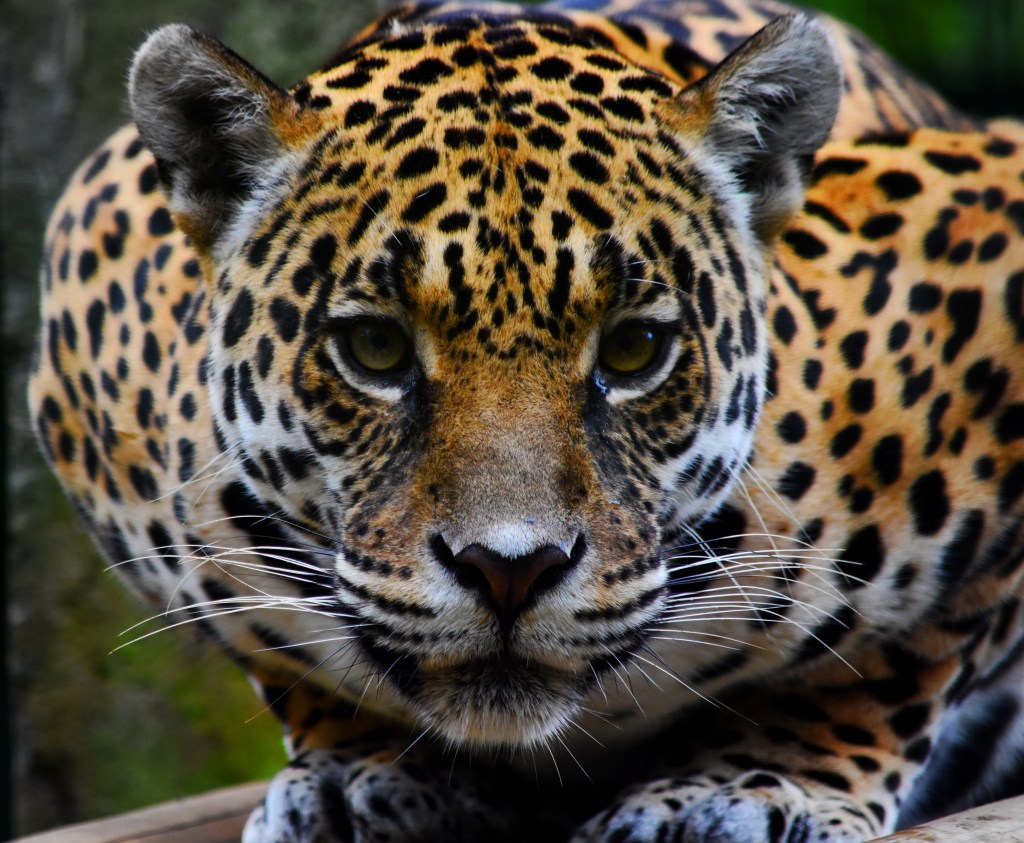
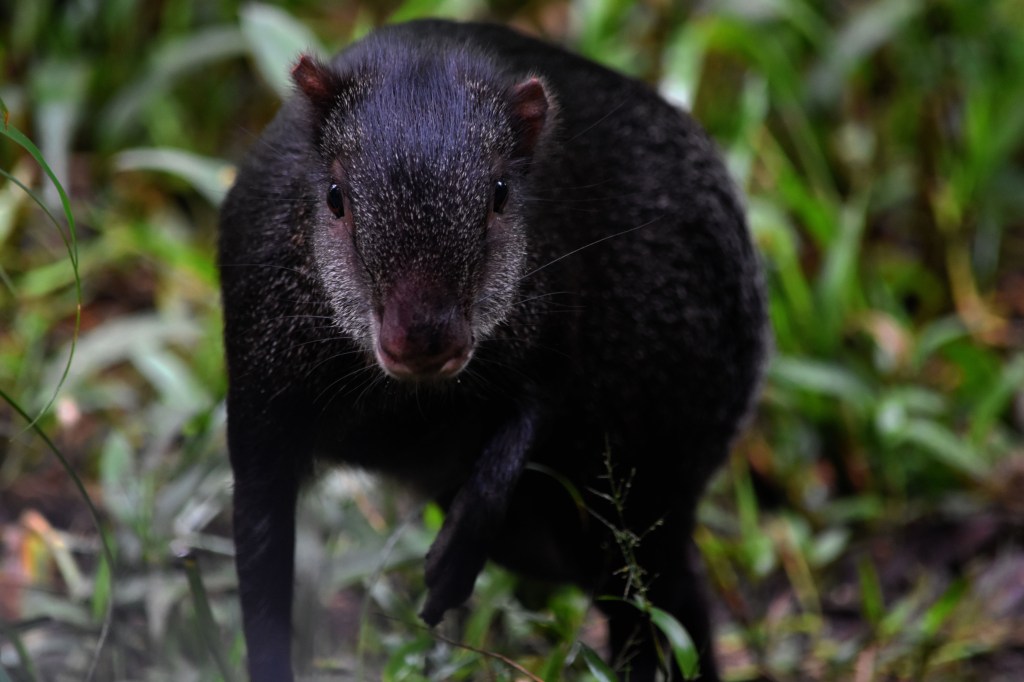
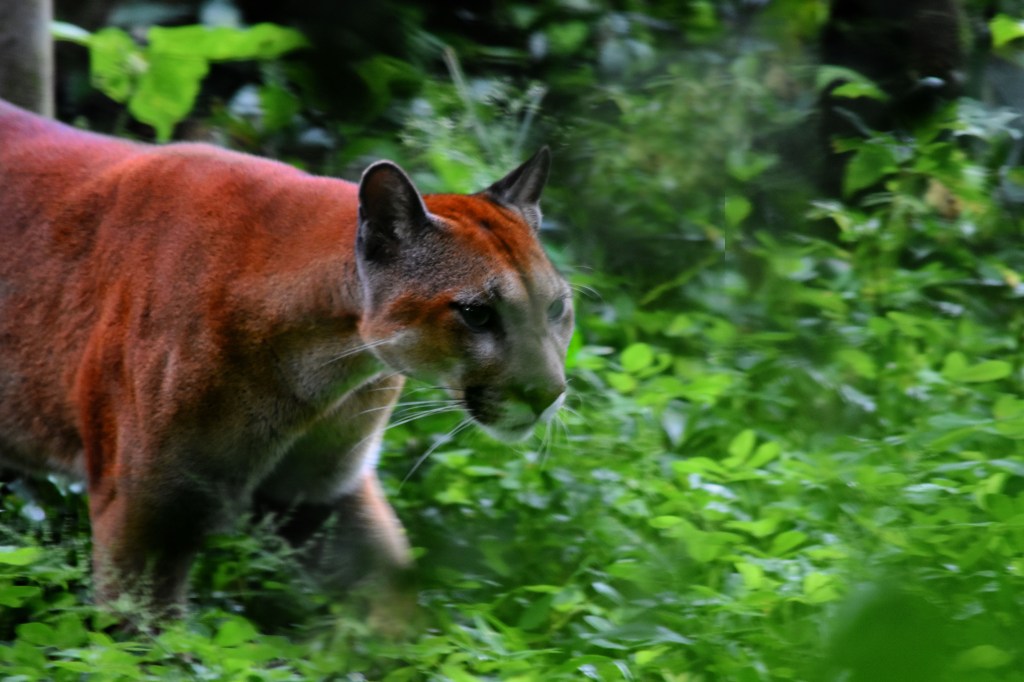
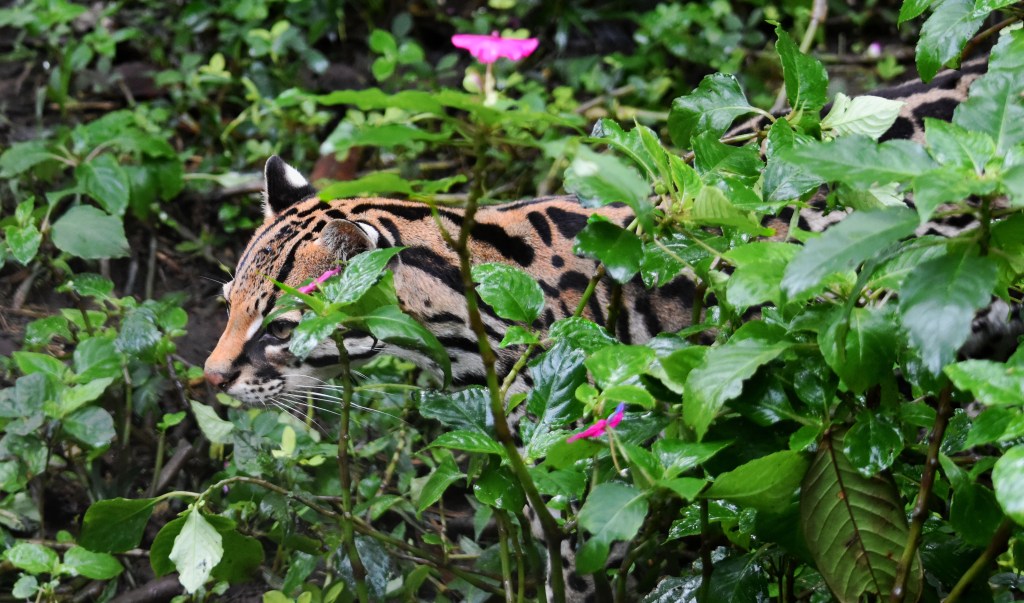
As we explored Macas, we came across a delightfully quaint zoo. For $2.50 each, the zookeeper ushered us through his park, offering a personal tour with information on each of the very few animals housed there. (Of course, it was all in Spanish, so I won’t try to quote any of the facts he shared.) However, what the zoo lacked in creature numbers was made up by the low cost and close encounters with the critters. And let’s just say one had to be very mindful of fingers and toes.
I fully enjoyed balancing myself on squishy planks, loosely laid and sinking into the muddy pathways while ducking palm leaves as I broke through the last-night’s spider weavings. And best of all, there were no vendors selling stuffed teddy bears, cotton candy, hotdogs nor cokes, all at exorbitant prices. Just the animals I was hoping to meet in the amazon. This rustic, overgrown zoo was my kind of place.
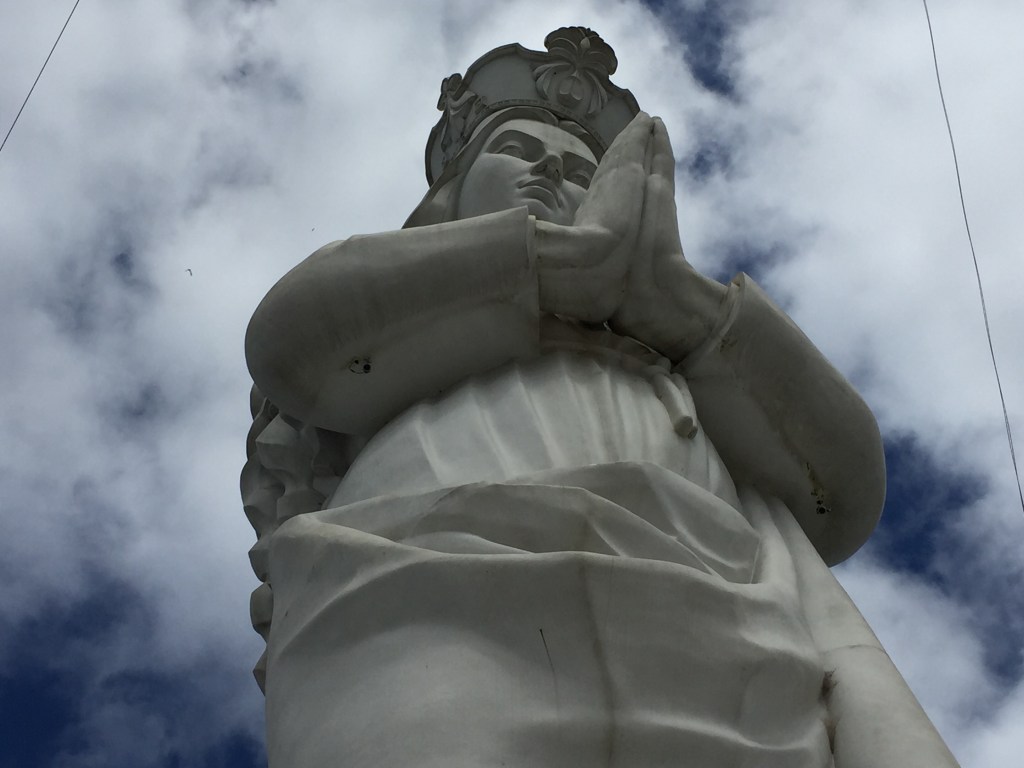
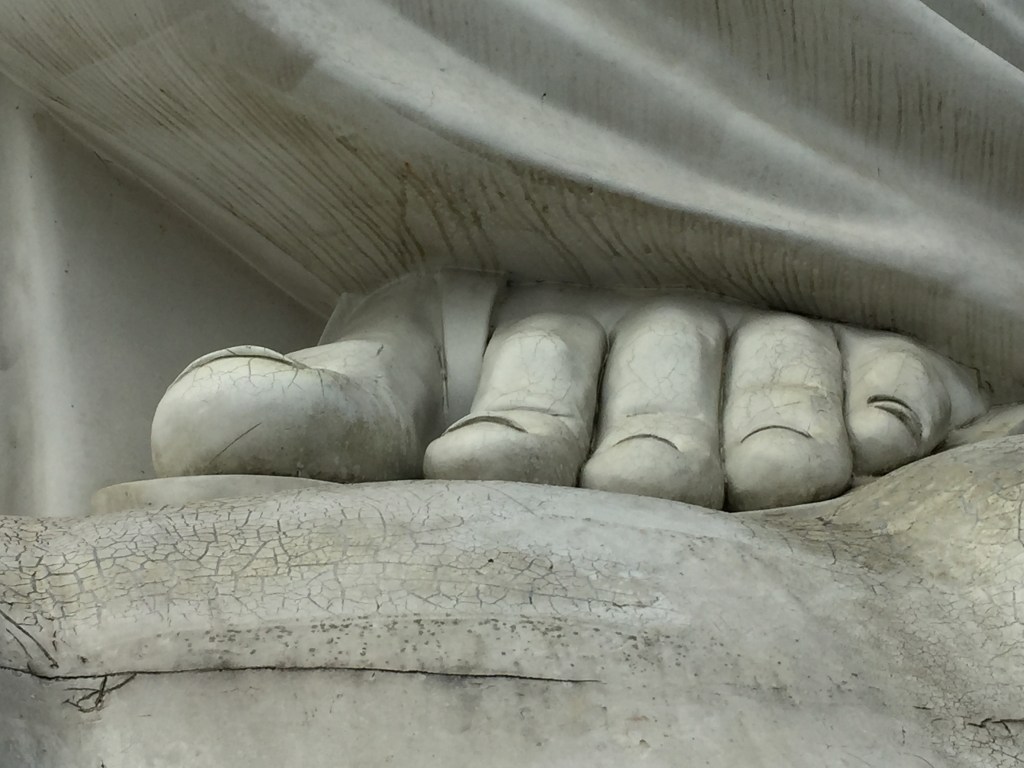
Since the zoo excursion from beginning to end (the zookeeper kept saying “Andale, andale!” when we’d linger) was less than an hour, we decided to finish out the morning by driving up the hill to the viewpoint, Mirador del Quilamo. Crowning the hilltop, watching over the city, is a monument to the Virgin Purisima de Macas which is only outsized by the numerous cell towers only yards away. (Couldn’t they have found a better place to plant those hideous things?)
Anyway, I was told that the view seen from the feet of the statue
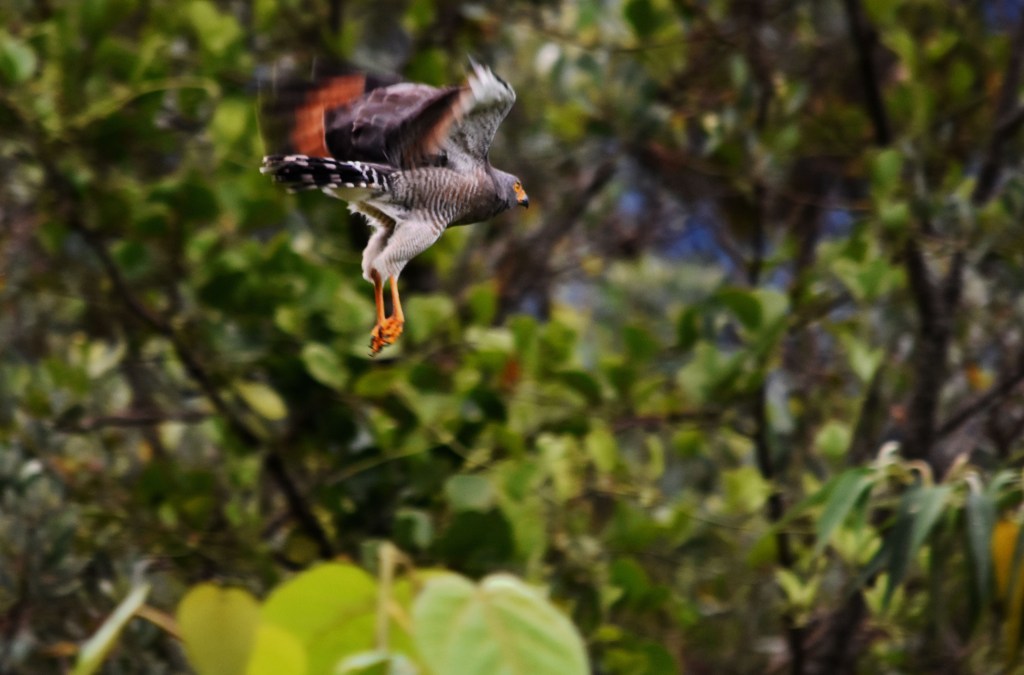
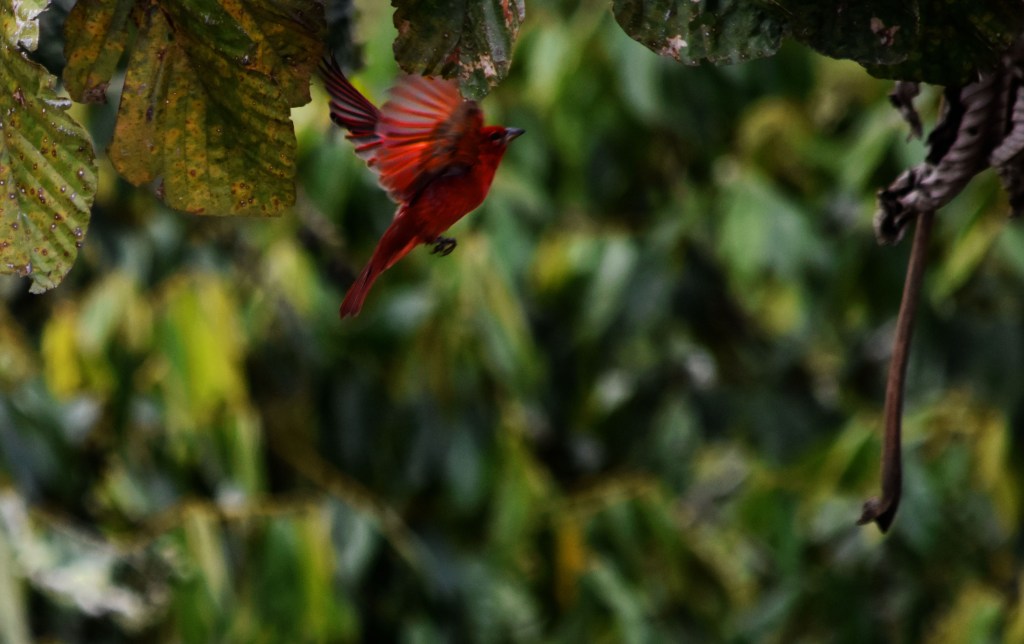
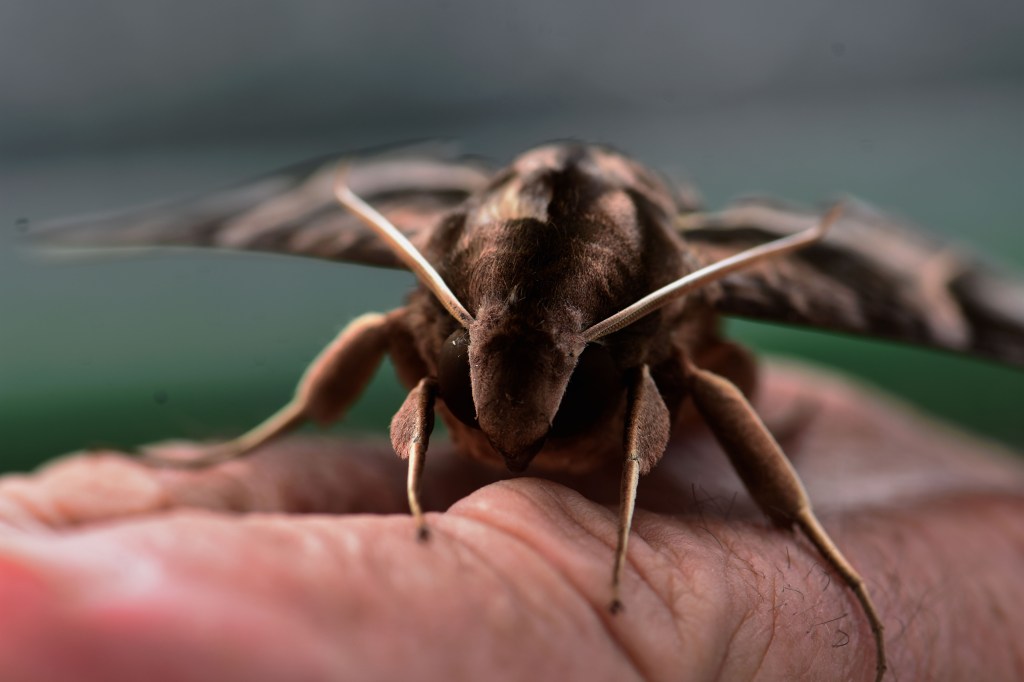
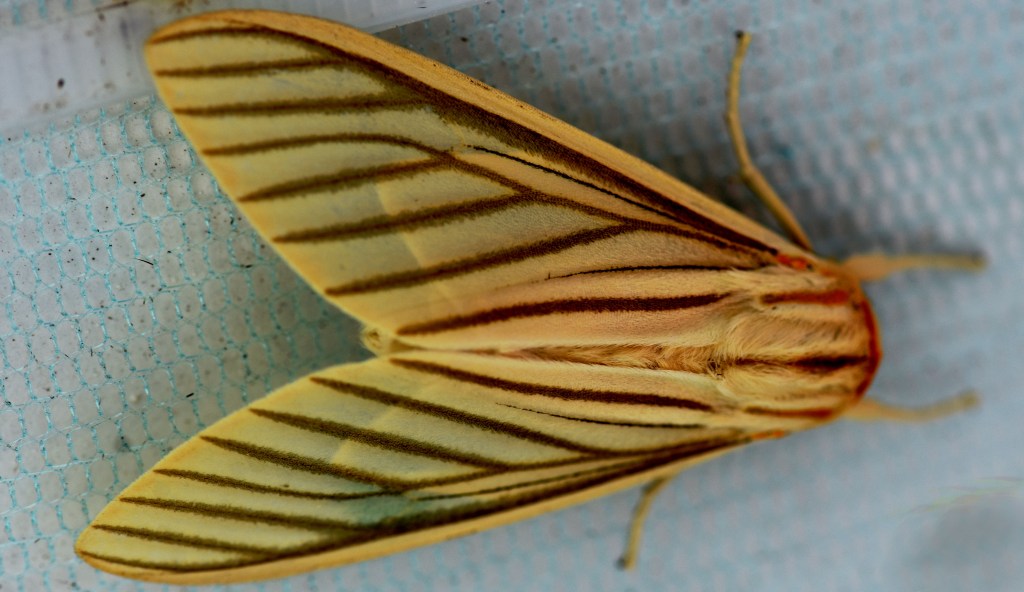
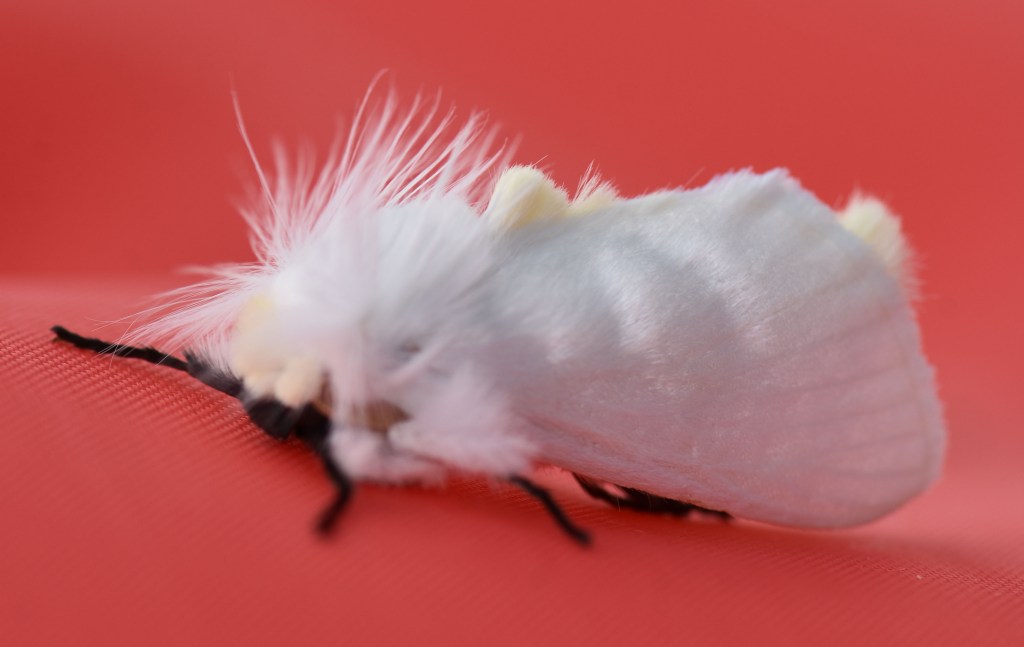
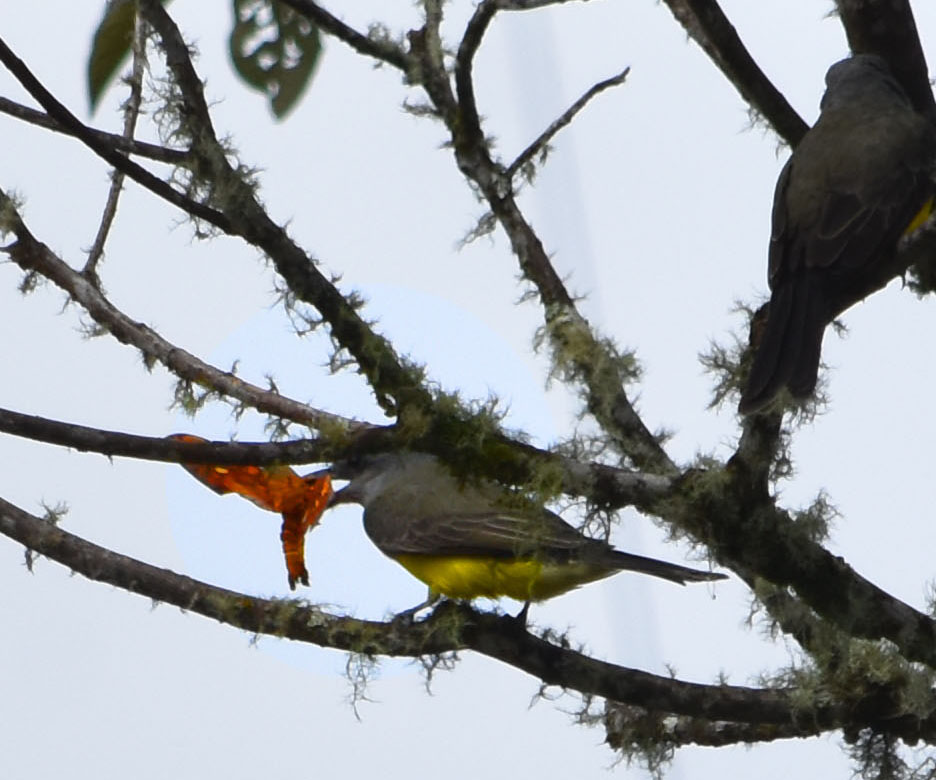
is wonderful, but I got totally distracted and spent my time and eyes focused on taking pictures of the moths, birds and, subsequently, the birds munching on the apparently quite tasty moths.
Macas is a great one-night stopping point if you plan to explore the Sangay National Park. (A word of warning though – you might want to check out your accommodations a little more carefully than we did!) The drive through the park is a full day experience, so launching from Macas is the perfect solution. But more about that stunning (not to mention sketchy) drive later.
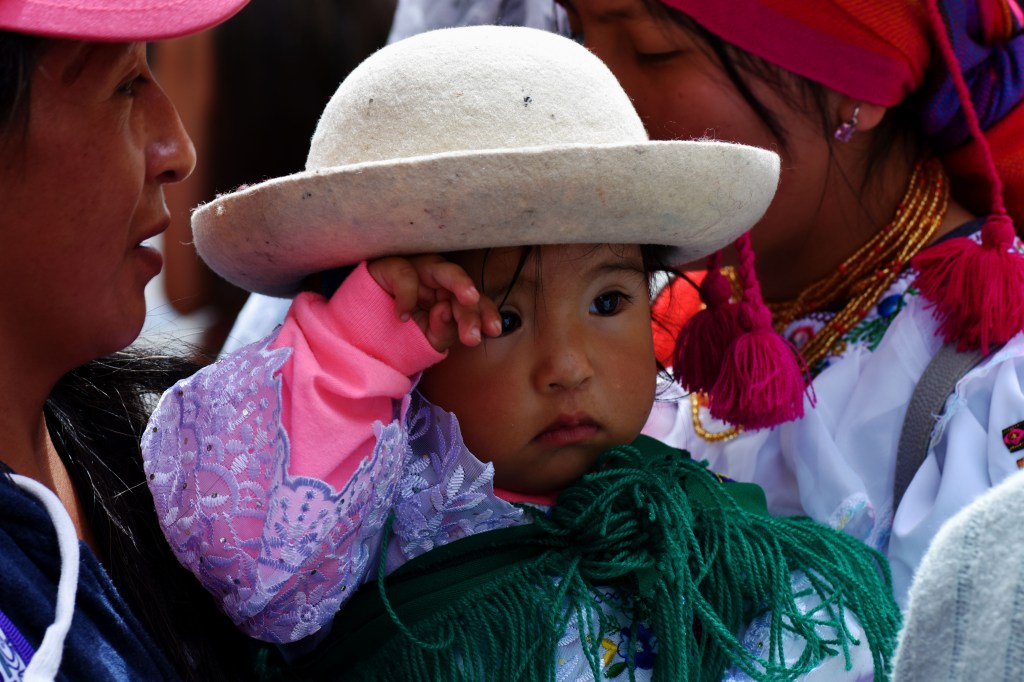
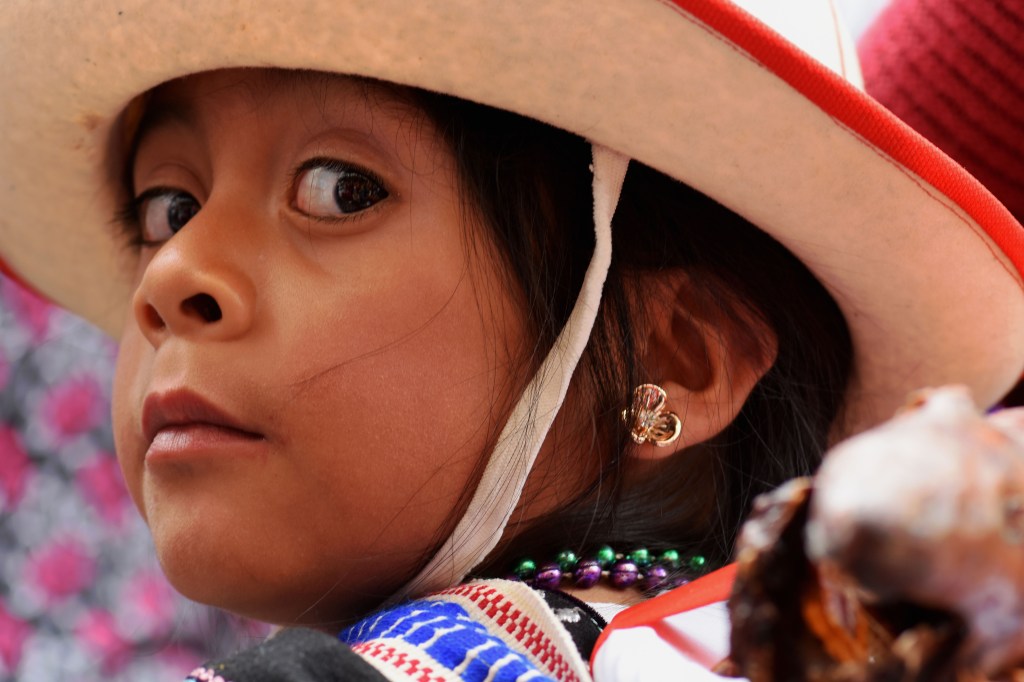
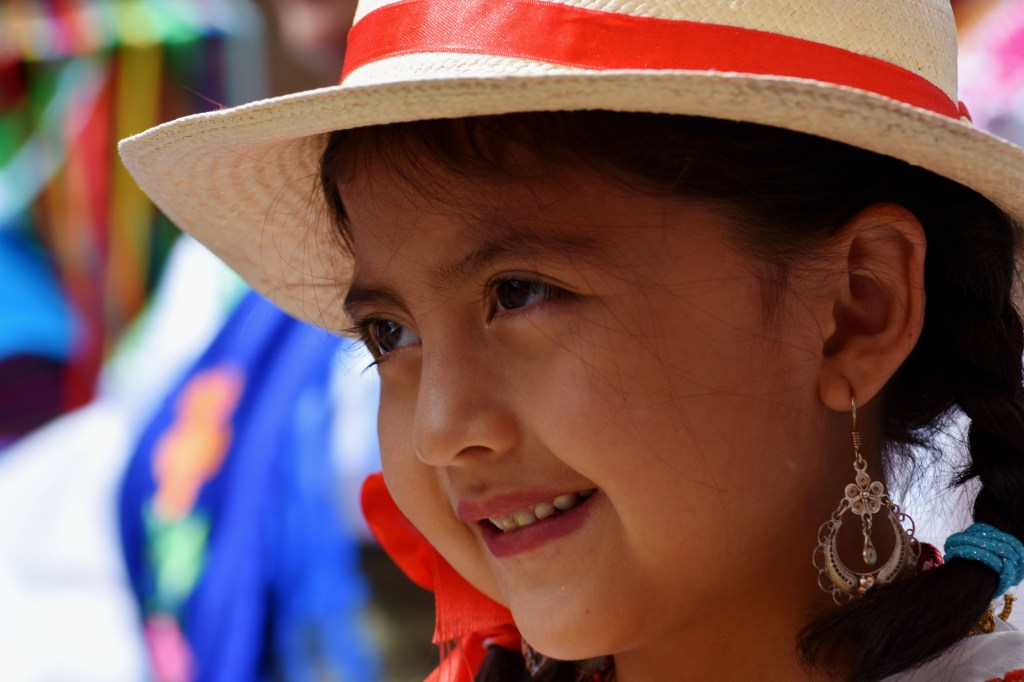
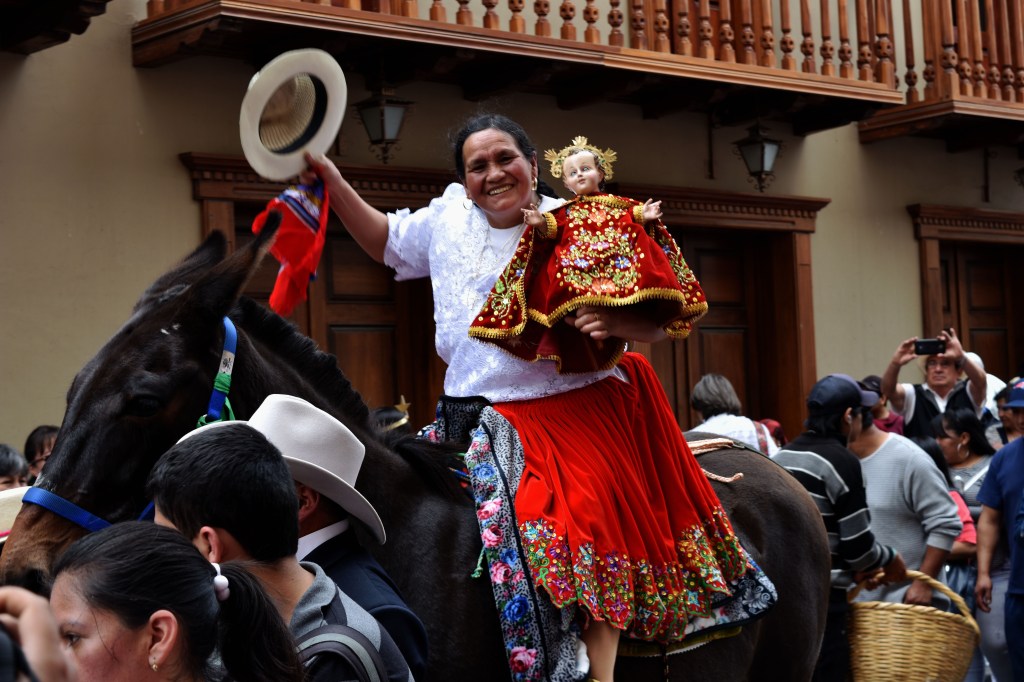
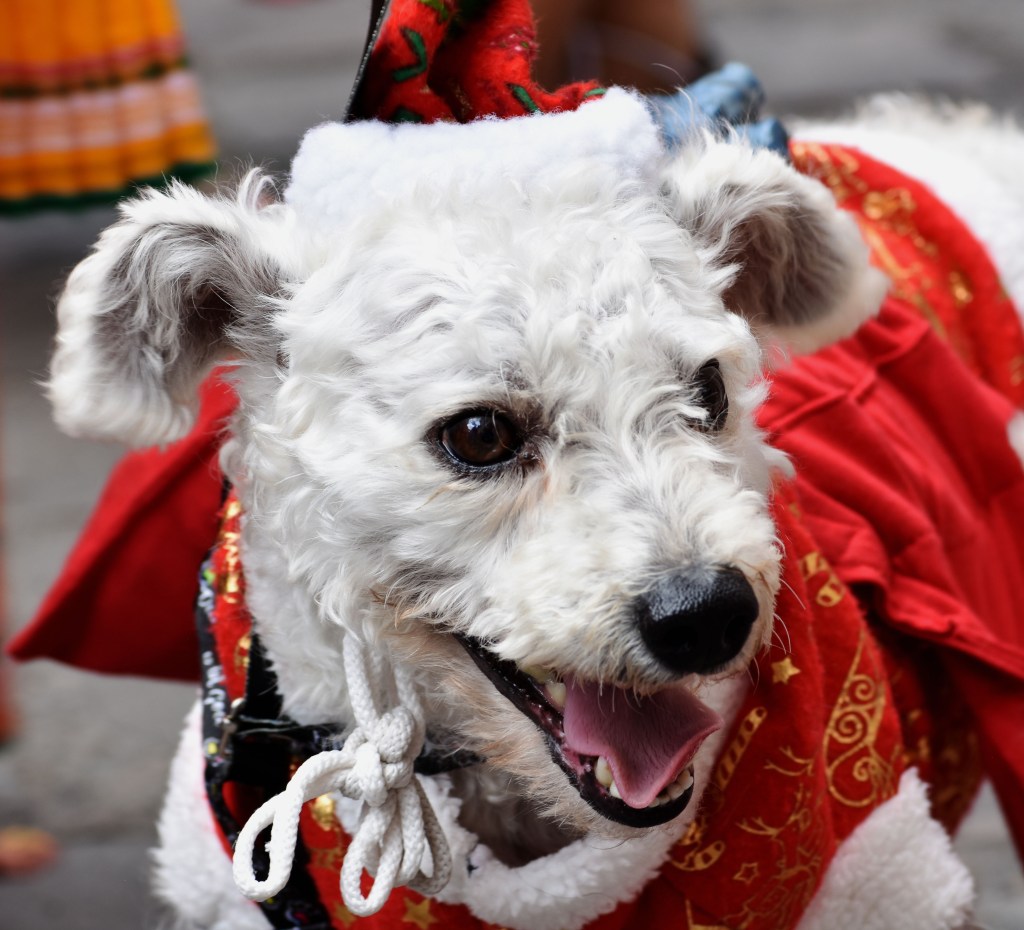
On the 24th of December, Christmas Eve Day, the annual Pase del Niño Viajero parade explodes onto the historic streets of Cuenca, Ecuador.
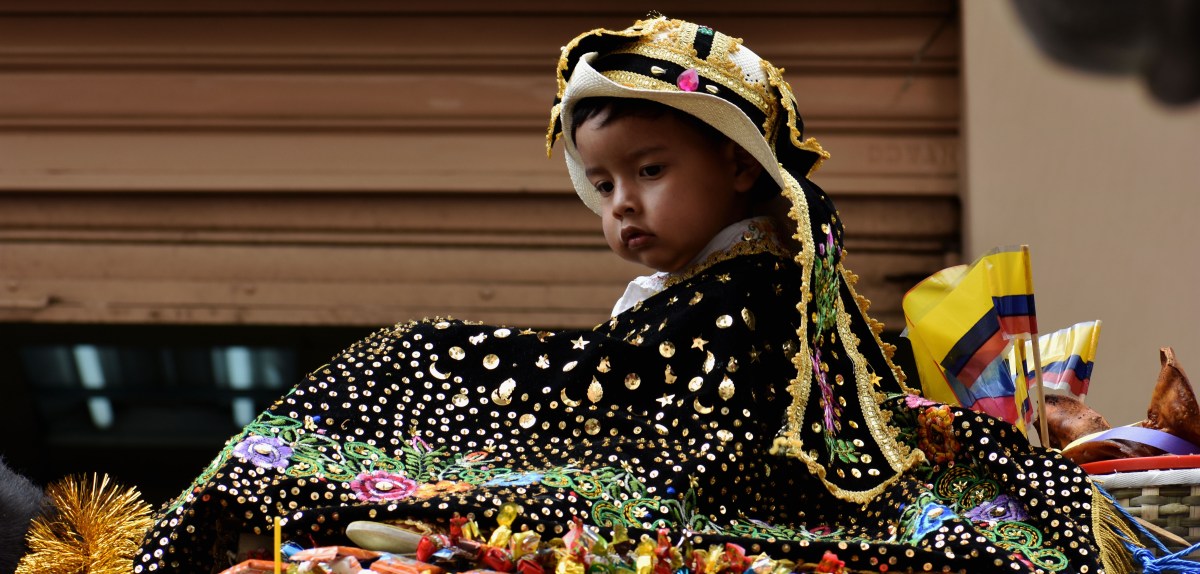
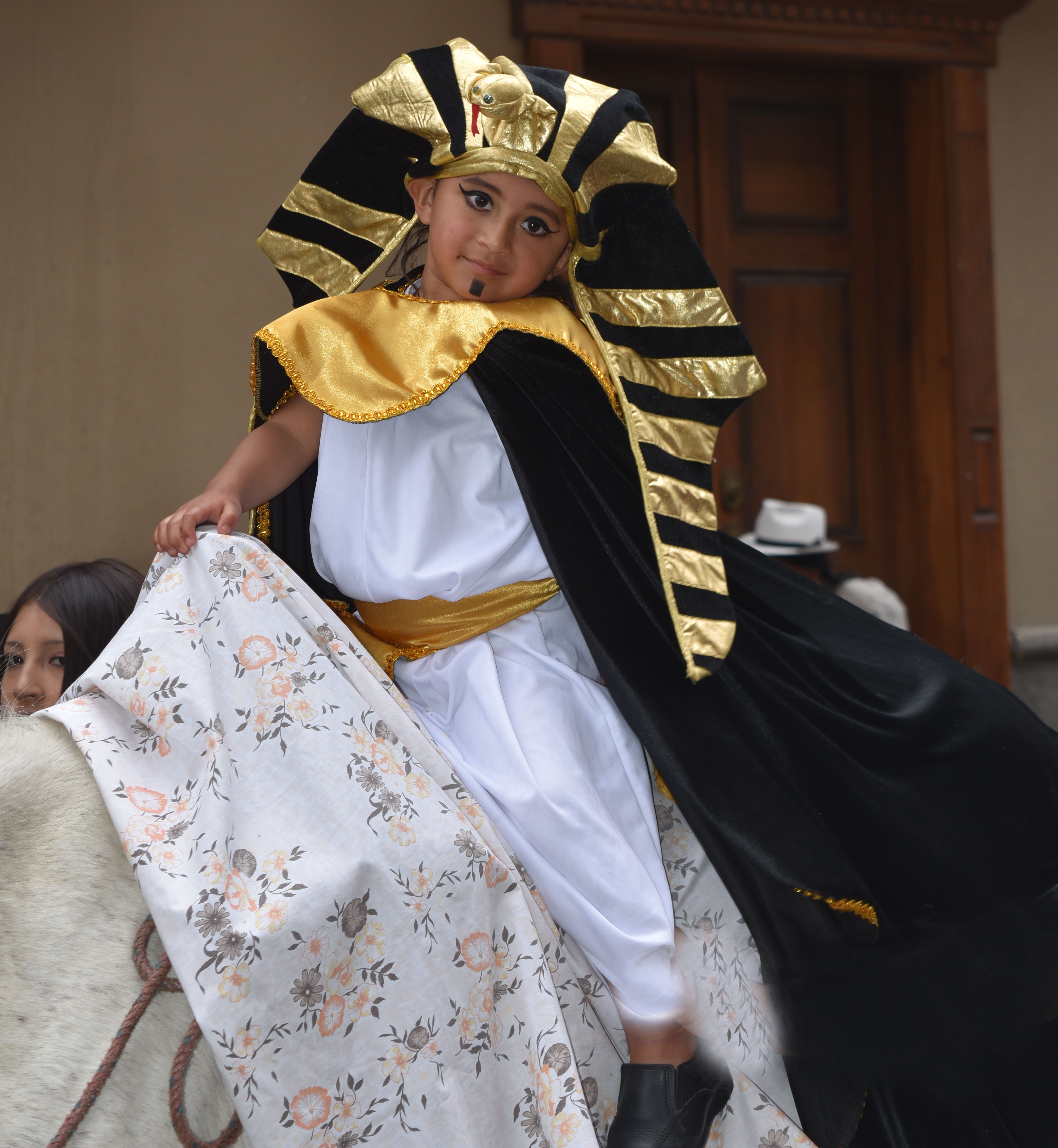
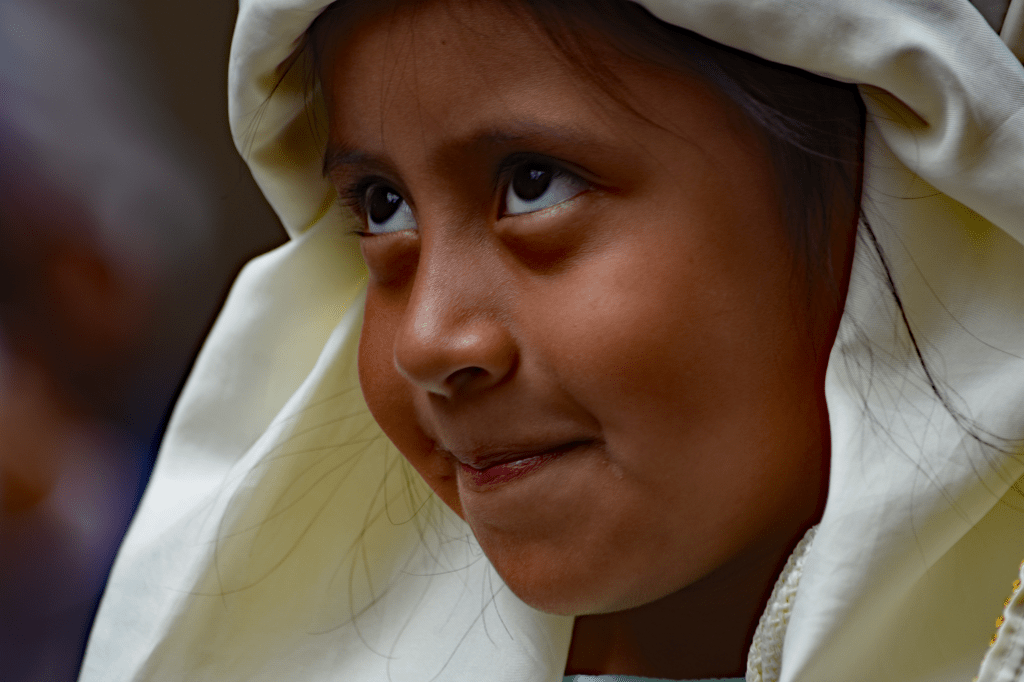
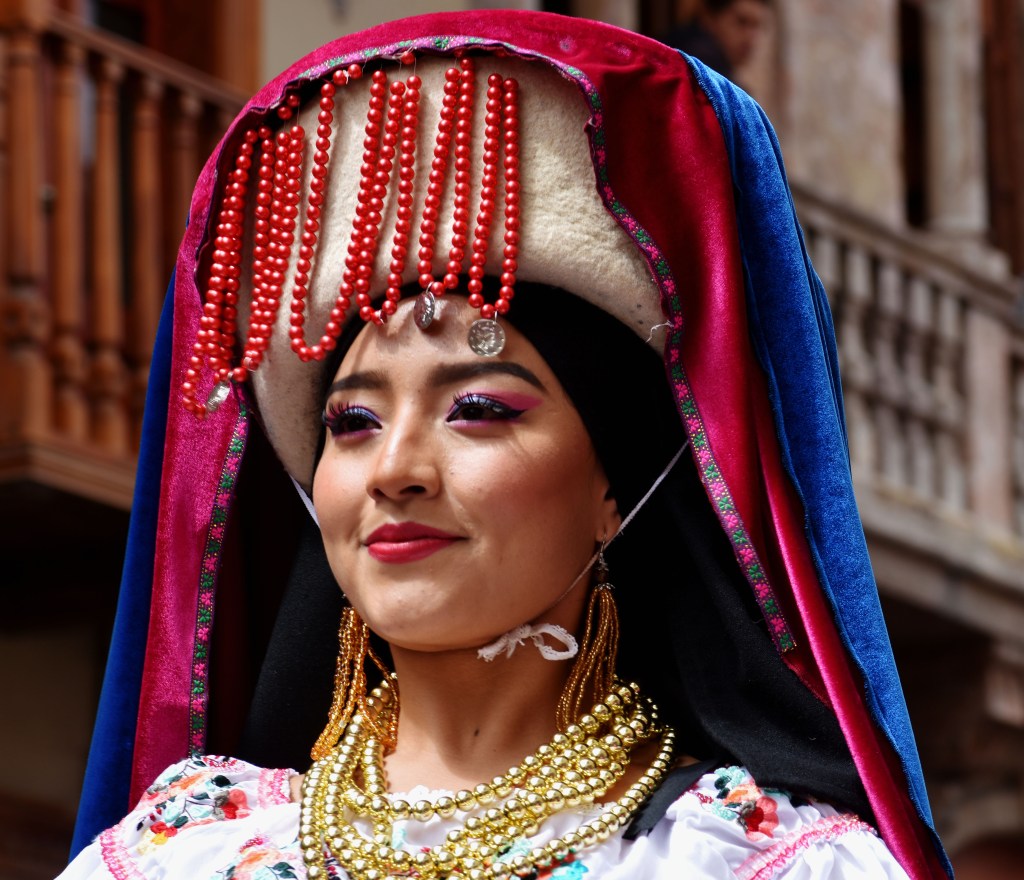
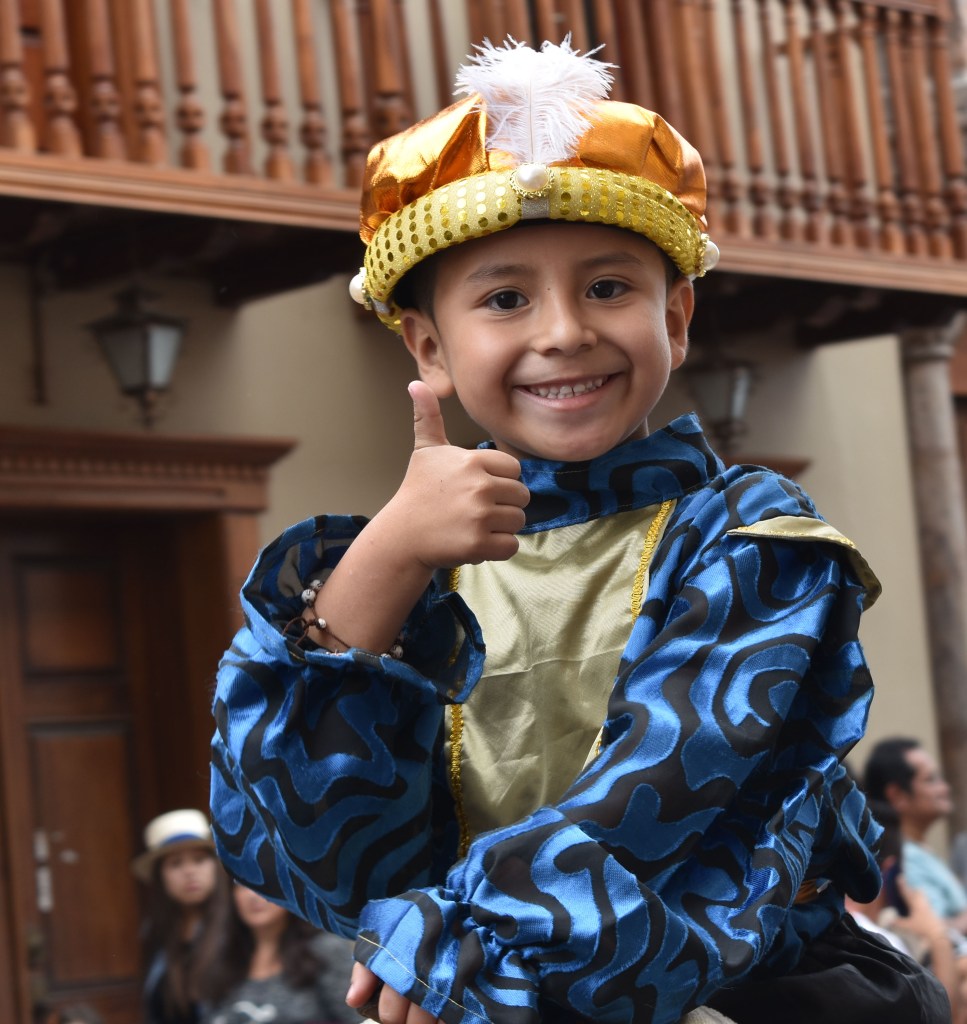
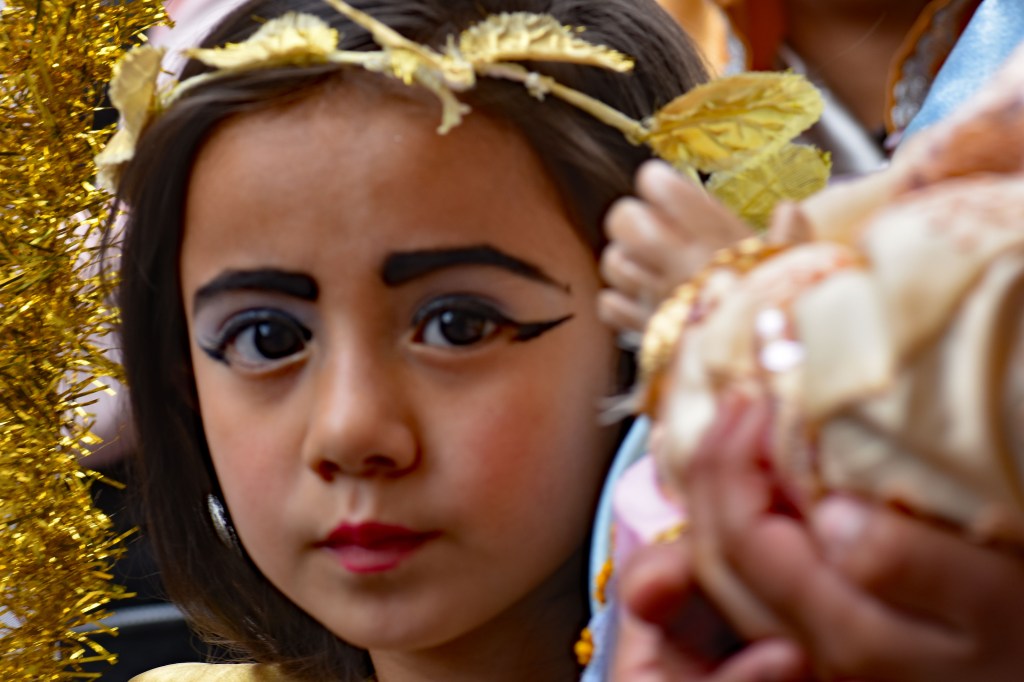
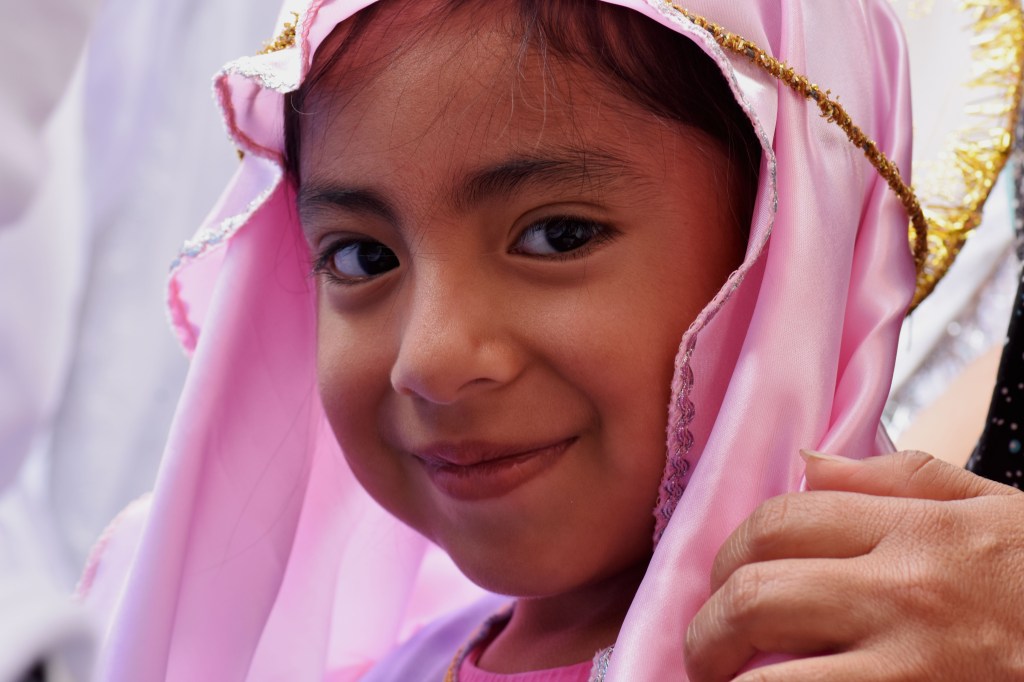
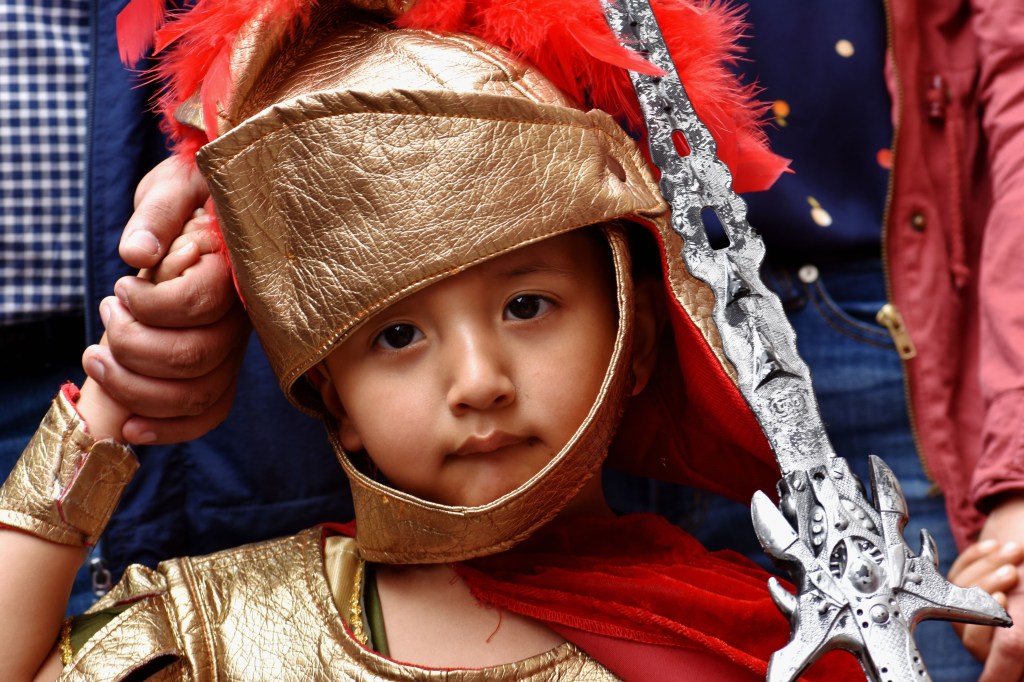
The brilliant colors and intricate outfits are stunning, and the rose petals swirling down from the heavens, dropped from a helicopter, are like bursts of fireworks on a clear night. The enthusiasm of the participants and crowd is contagious.
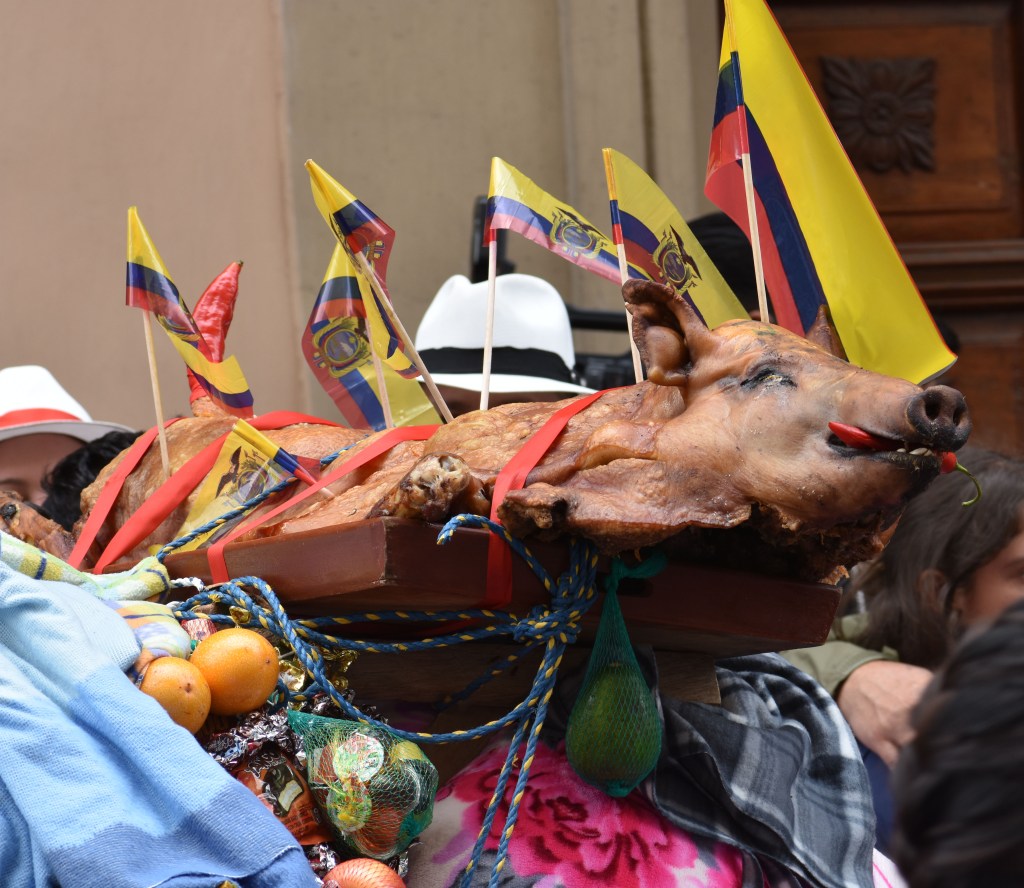
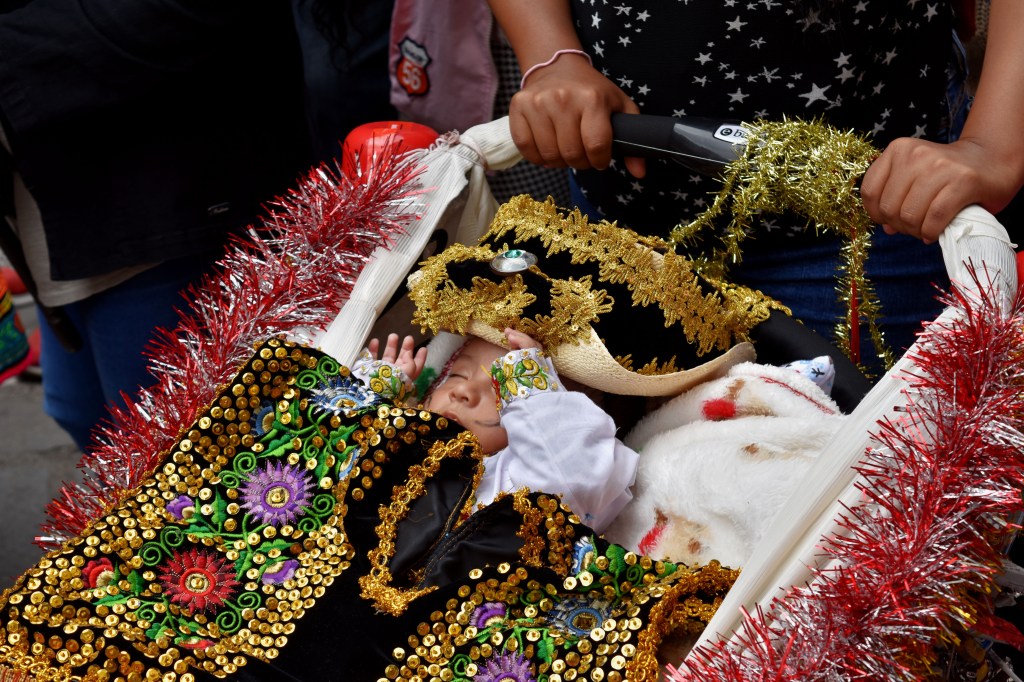
The procession, which lasts all day, celebrates not only the deep Catholic faith shared by many here, but also the traditions and beliefs of the many indigenous people of Ecuador. Literally thousands of participants come from all over, and one is taken away quickly by the sights and sounds. One after another scene goes by: floats festooned with flowers, fruits and vegetables representing the agriculture of regions; marching bands; groups performing cultural dances; handsome, proud horses ornamented with candies, cuy (South American guinea pig – a traditional dish here)
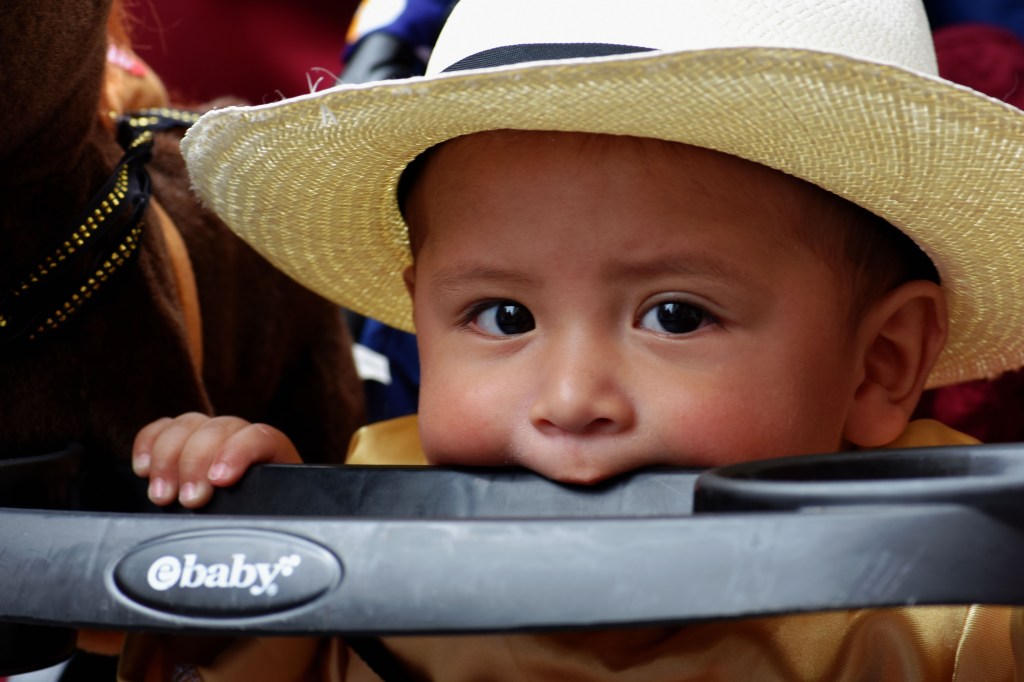
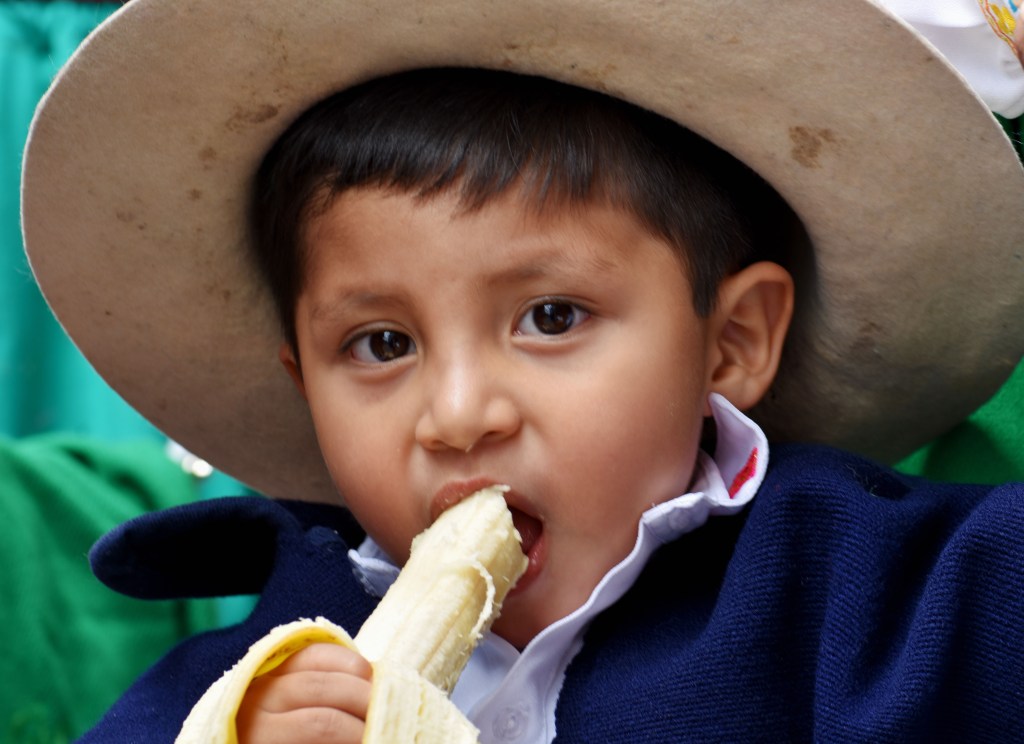
and chickens, and on the horses’ backs, the most beautiful children you’ve ever seen; donkeys carrying Mother Mary and the baby Jesus; carts with sleeping children in a makeshift manger with whole roasted pigs lashed onto the back; and the most gorgeous assortment of costumes and cultural wear you can imagine.
I was lucky enough to be here in Cuenca again for this year’s parade – my second opportunity to witness this very special festivity. With camera in hand, I prepared to capture the moment (or in this case, the hours of moments).
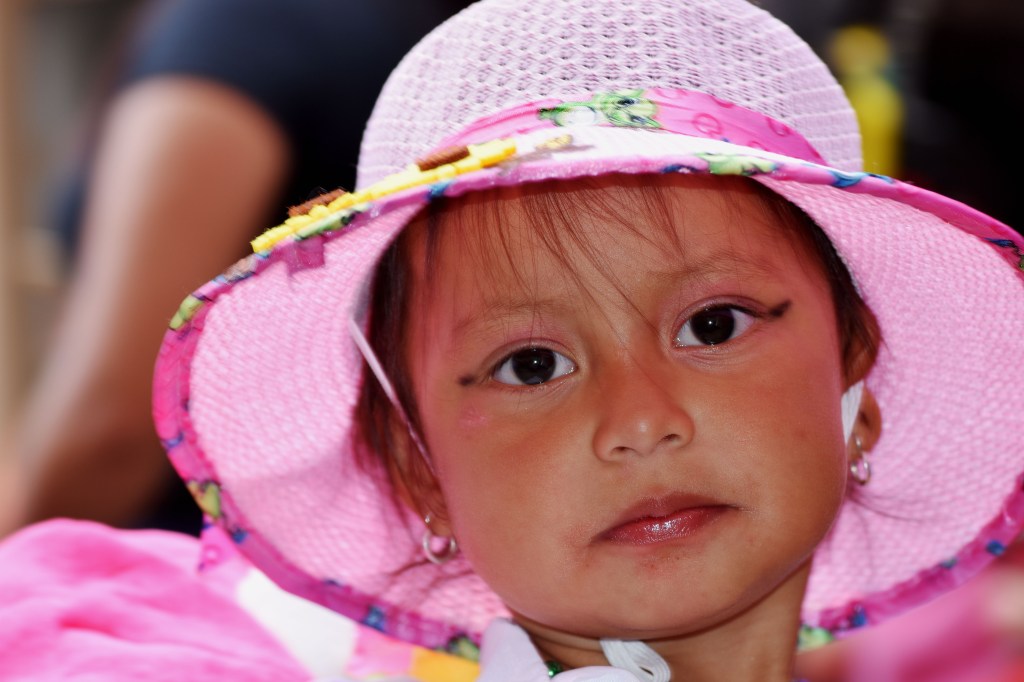
But I quickly realized that I would have to decide on which camera lens I should use. Macro for precise closeups that seize, in great detail, smiles, frowns, eyes and excited or bored expressions.
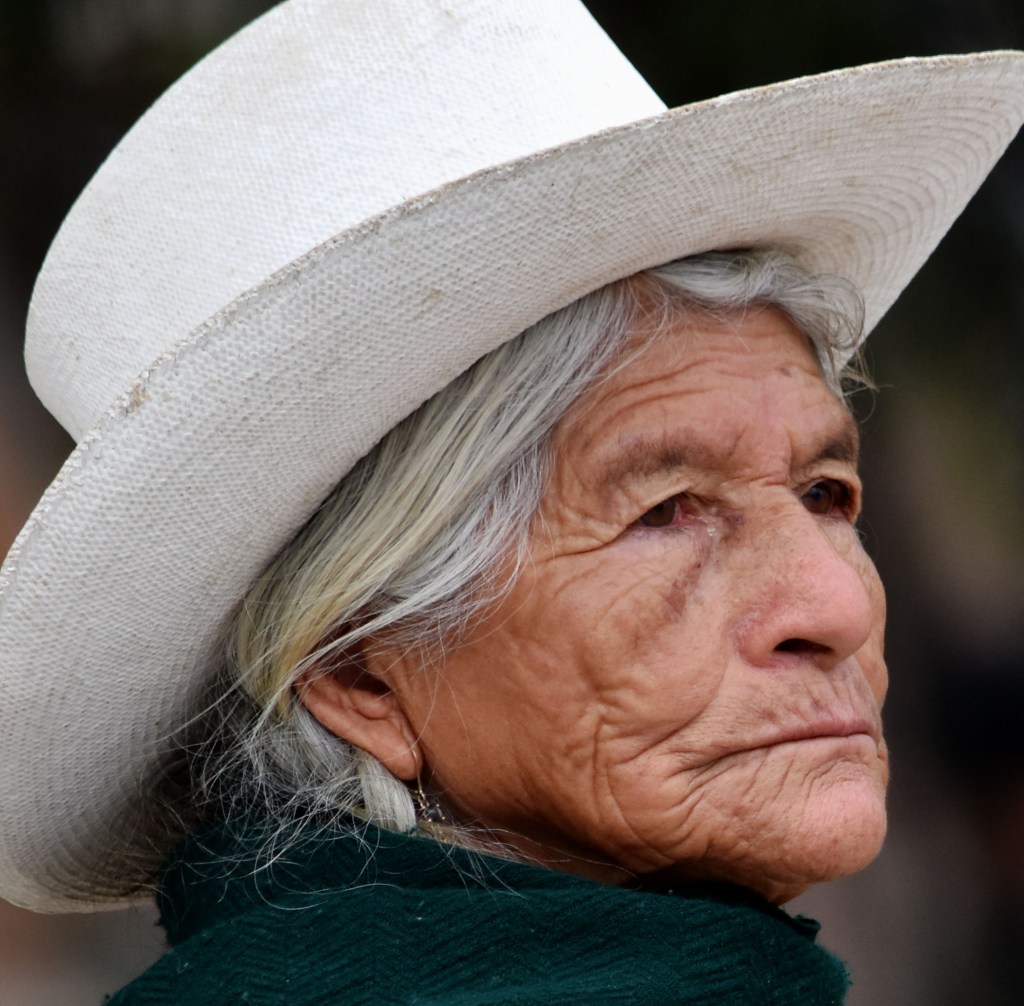
Unfortunately, though perfect for closeups, the Macro completely misses the larger expression and excitement of the parade and its jubilant crowd. A 55 mm is fine for freezing in time the outfits worn, but then the fine details of hair and wrinkles are sacrificed. Uggg.
Or maybe I should employ my telephoto lens to capture the participants that are on the far-side of the street? Back and forth I switched, finally settling in on my Macro lens. It was just too risky to chance losing the many precious children’s faces for the sake of capturing the larger blur of action.
As my camera continues to teach me, if I choose to view the world through only one lens, I will miss the grandeur of the larger overview life has to offer. However, if I stick to enjoying the vast vista, refusing to change lenses, I’ll miss the fine details seen only on close, focused examination.
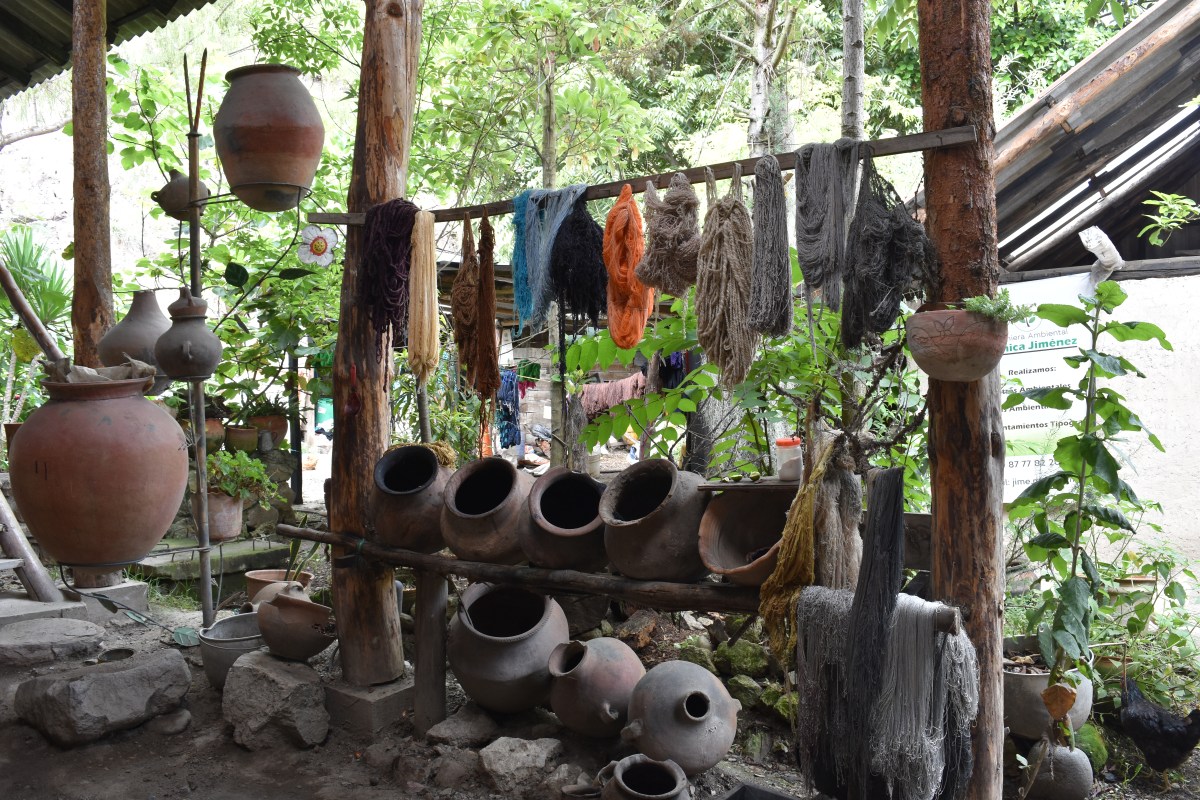
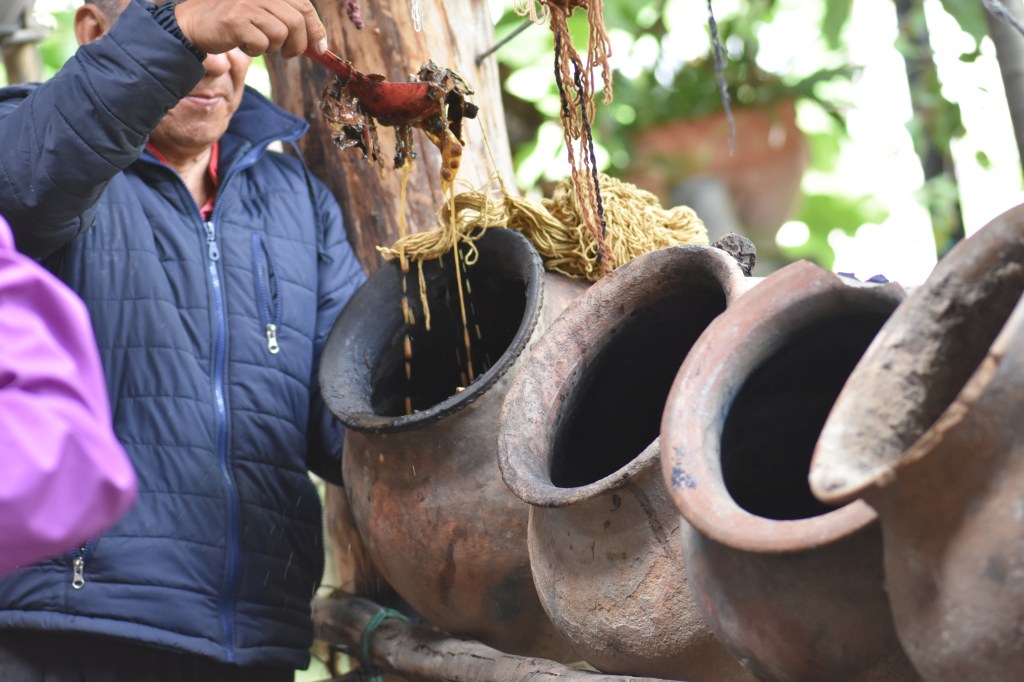
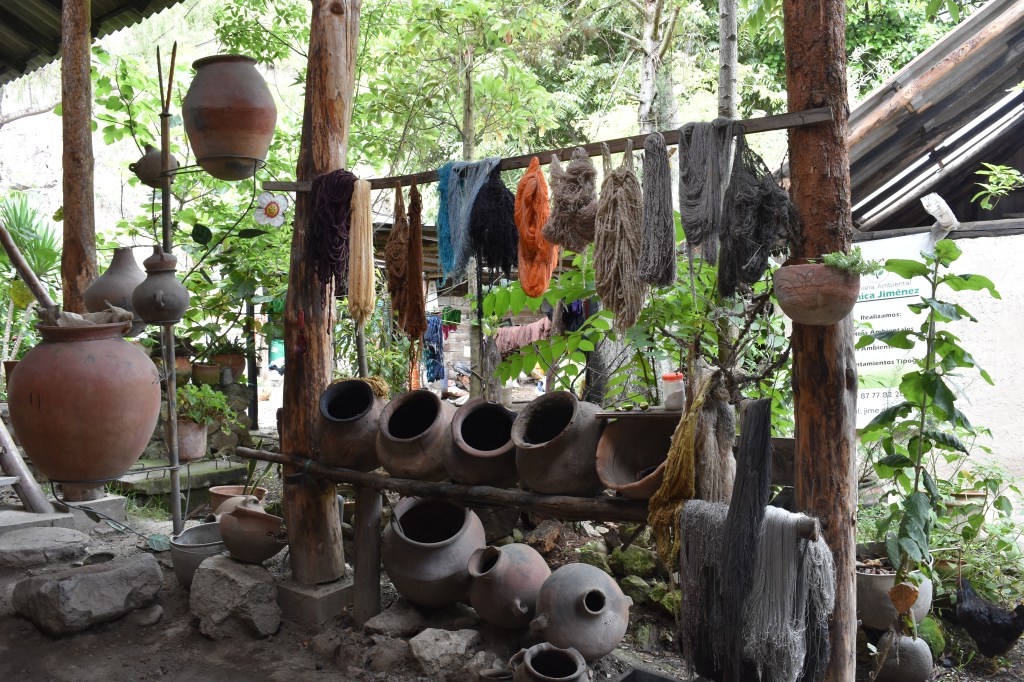
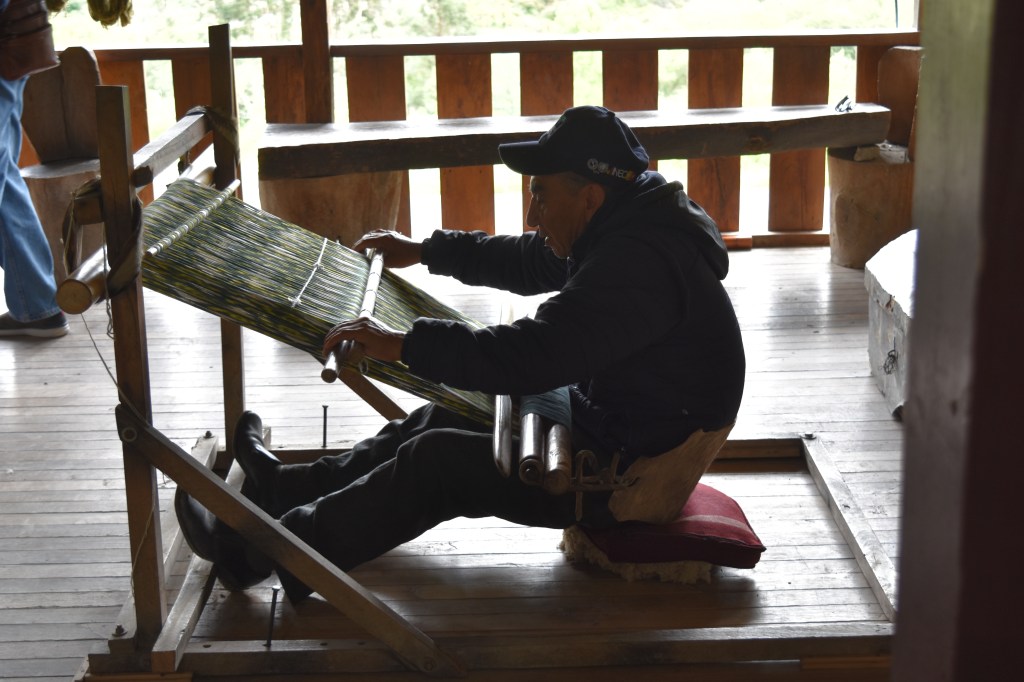
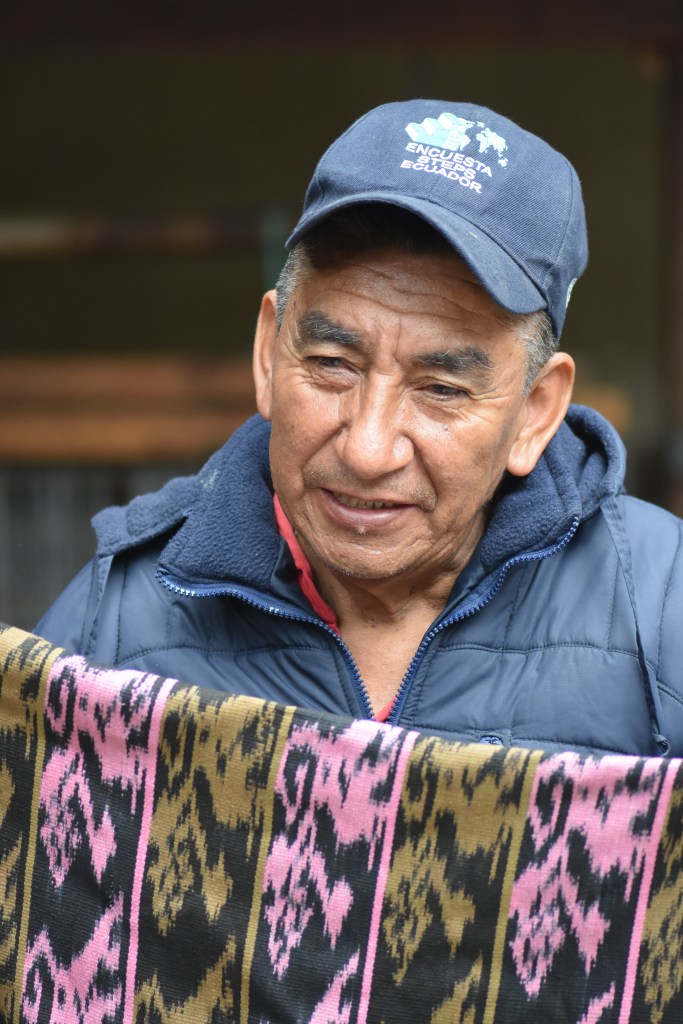
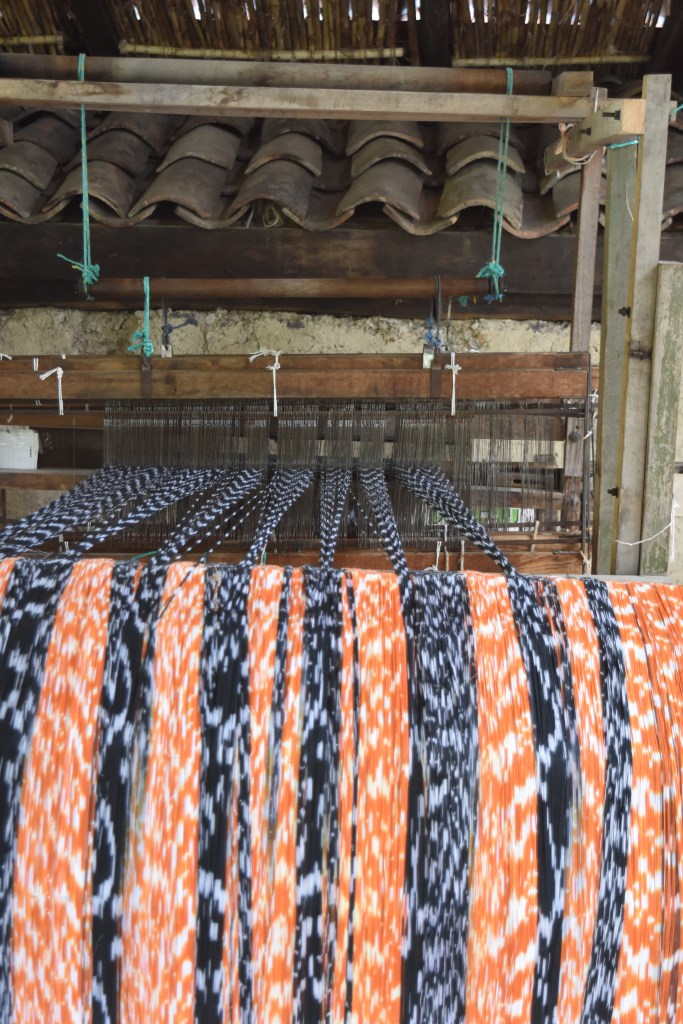
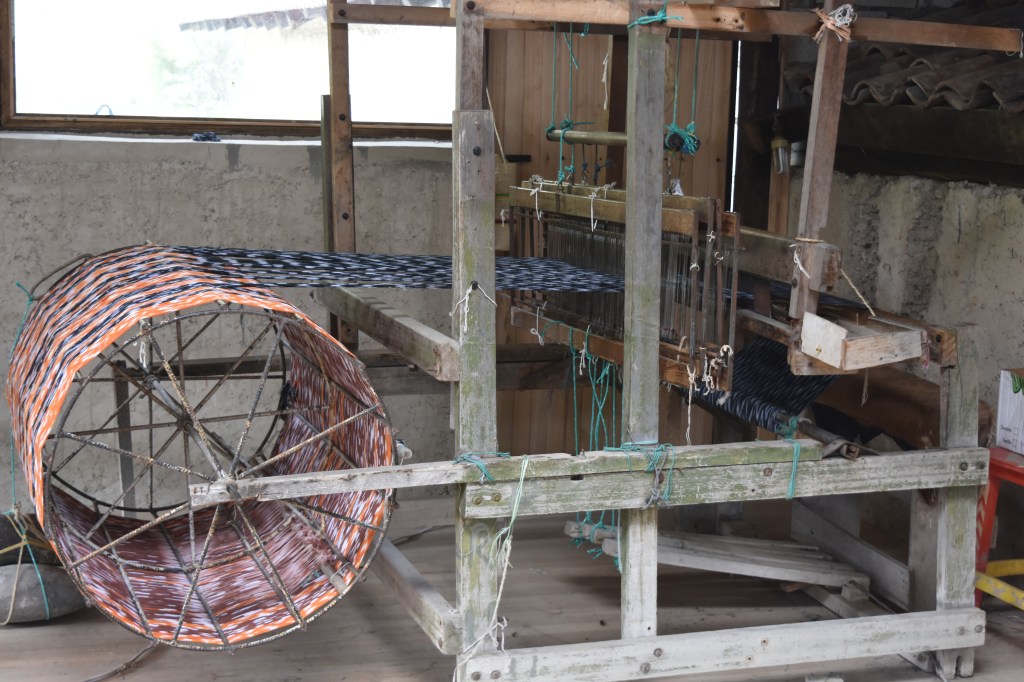
Traveling north out of Cuenca on the Pan American Hwy (side note: nice road) we took a detour away from the highway venturing into a small town, Paute, Ecuador. Brent and Mers wanted to stop at a weaving shop housed in an old building they had come across in earlier travels. We were greeted warmly by the owner, Jose Jimenez who is a descendant of generations of weavers. For a dollar each he took us on a wonderfully interesting tour, explaining the dyeing process and knotting of threads made from the agave plant which assists in the dyeing of the cotton.
With a wooden spoon that looked older than him (and he wasn’t young), he’d scoop from clay pots dyes made from natural products such as indigo and cochineal insects. He dabbled a little bit of a dye in Brent’s hand then changed the colors a number of times by simply adding ingredients such as salt or a squeeze of lime. It was mind-bending watching a squirt of lime completely change the pigment color.
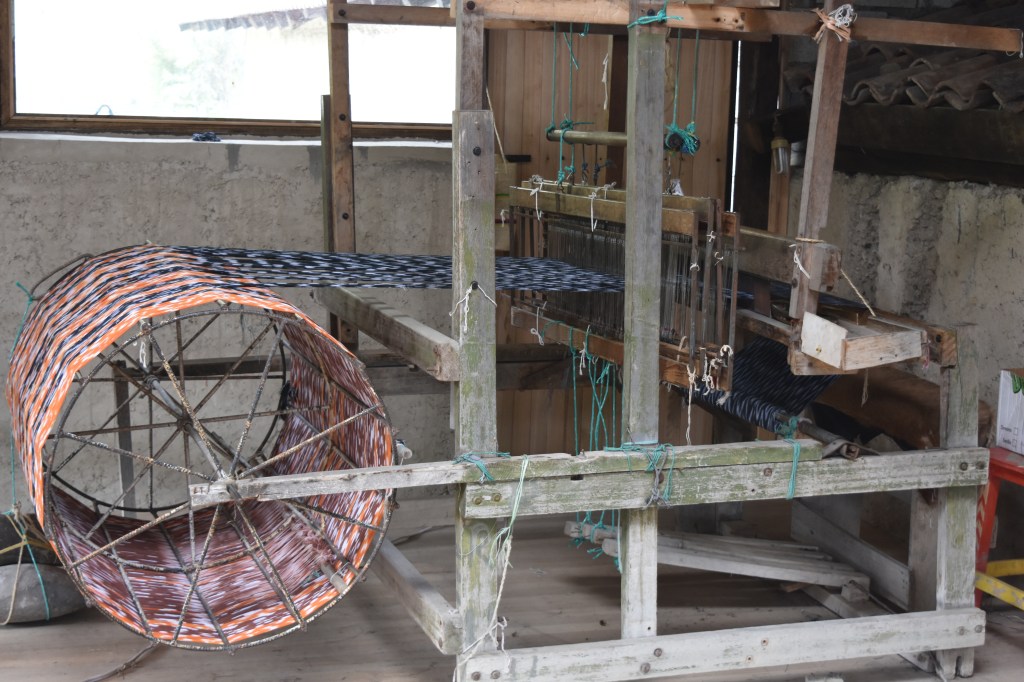
But mostly, I was mesmerized by the old wooden equipment.
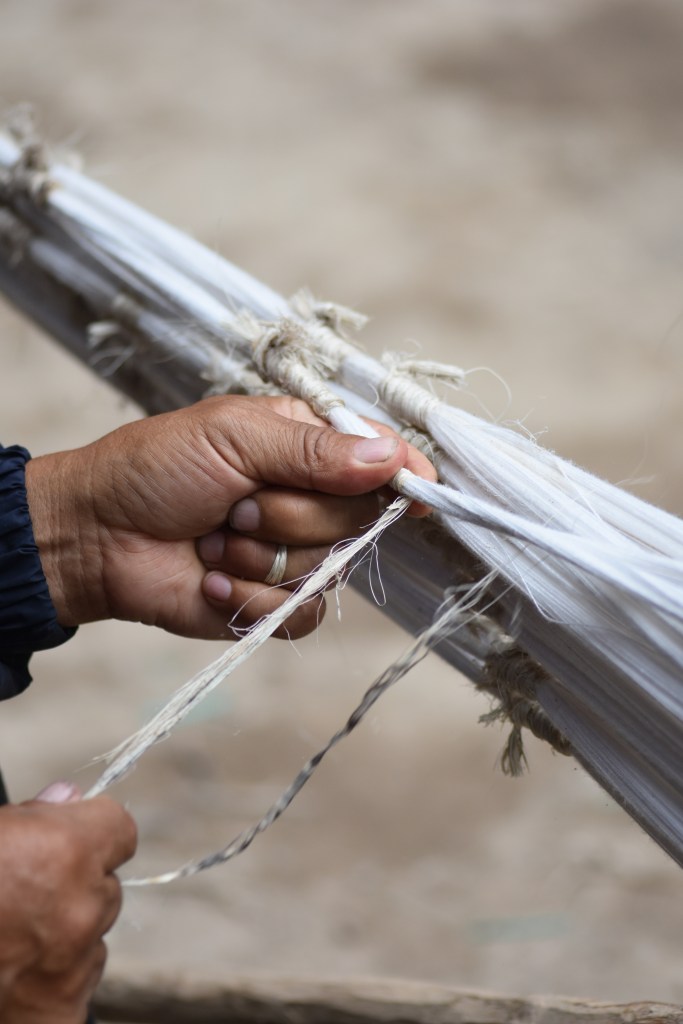
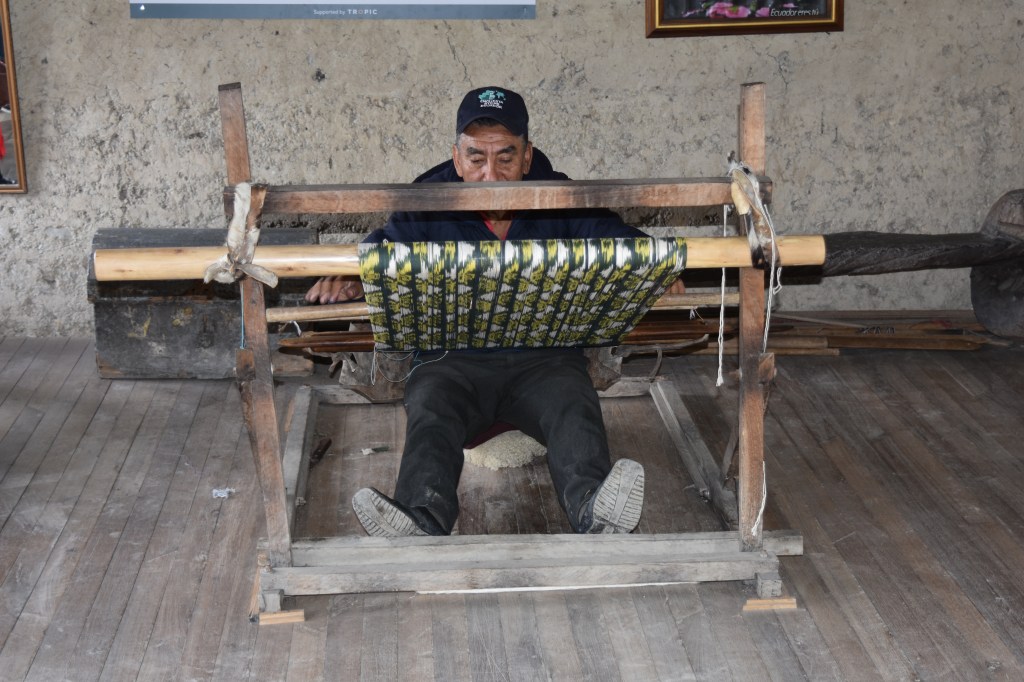
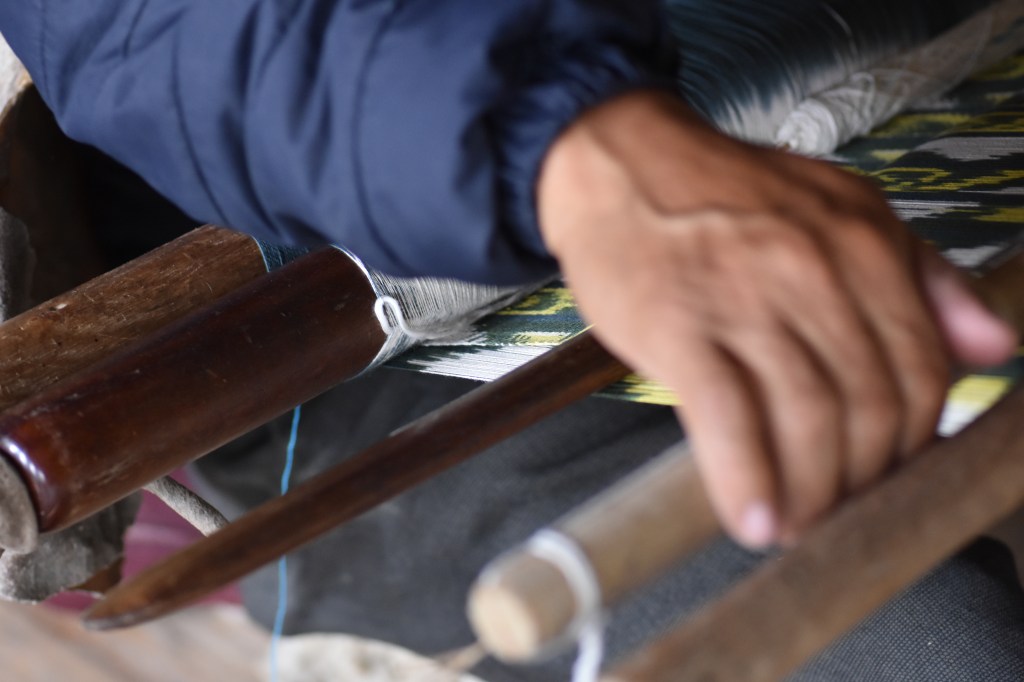
He let us watch him hand weave on equipment that his mother wove shawls on over a 100 years ago. Imagine sitting on a worn spot beveled down into the wooden seat that your mother’s and mother’s mother’s butts sat upon, their back supported by a leather strap with their legs extended pushing against a wood plank that assisted in the movement of the weaving machine. The only power was that of their arms, hands, backs, legs and creative imaginations.
Strand by strand his fingers would thread a large wooden needle (3 ft give or take) through hundreds of other strands creating a tapestry of inflight hummingbirds and butterflies fluttering in a mountain setting. Breathtaking.
Let me just start out by saying that I suspect my title doesn’t quite summon up the majestic imagery I had hoped to portray. You know – like the mental picture created when one reads something like “My soul soars with the angels”. Pretty sure my title won’t inspire any Rembrandts.
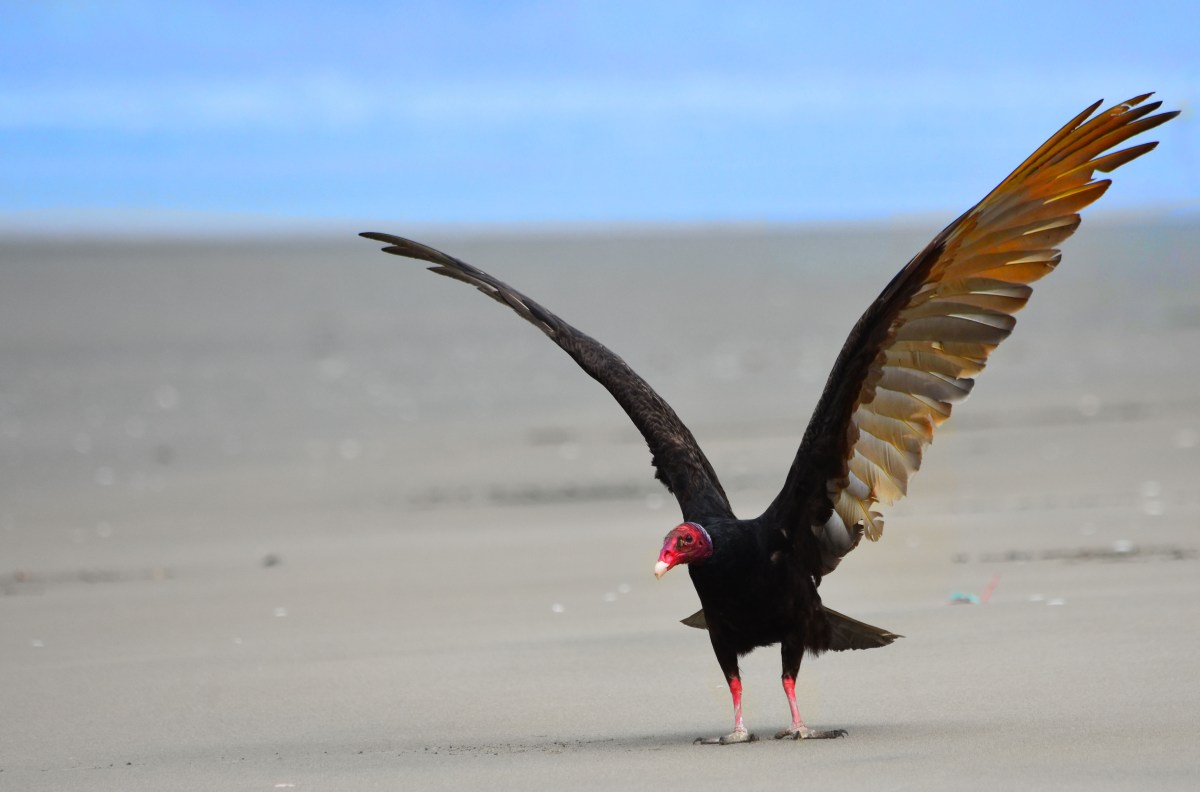
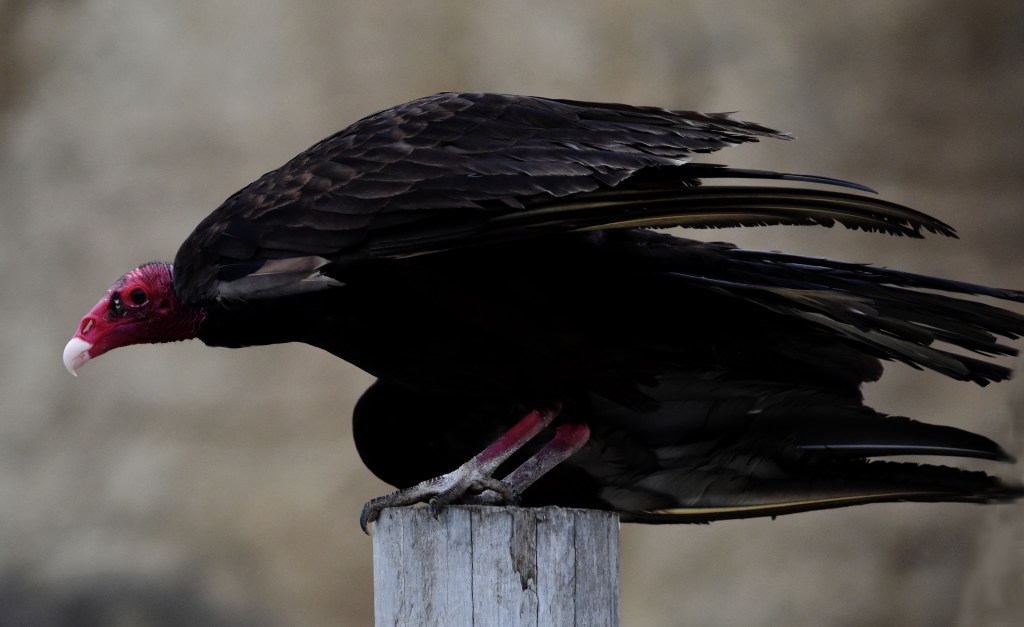
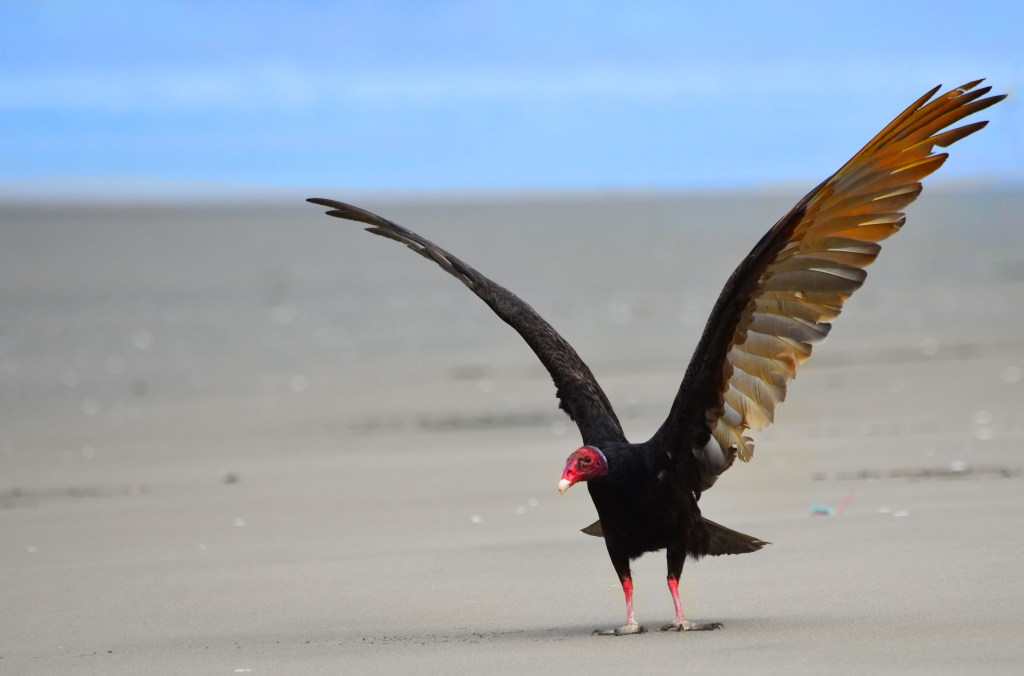
Nonetheless, having just enough personal insight to know that I am more at ease in the company of buzzards than angels, it seems more fitting to wear the wings that suit me best. Thus, here on the playas of Canoa, Ecuador, I allow my heart and mind to soar with scavengers rather than angels.
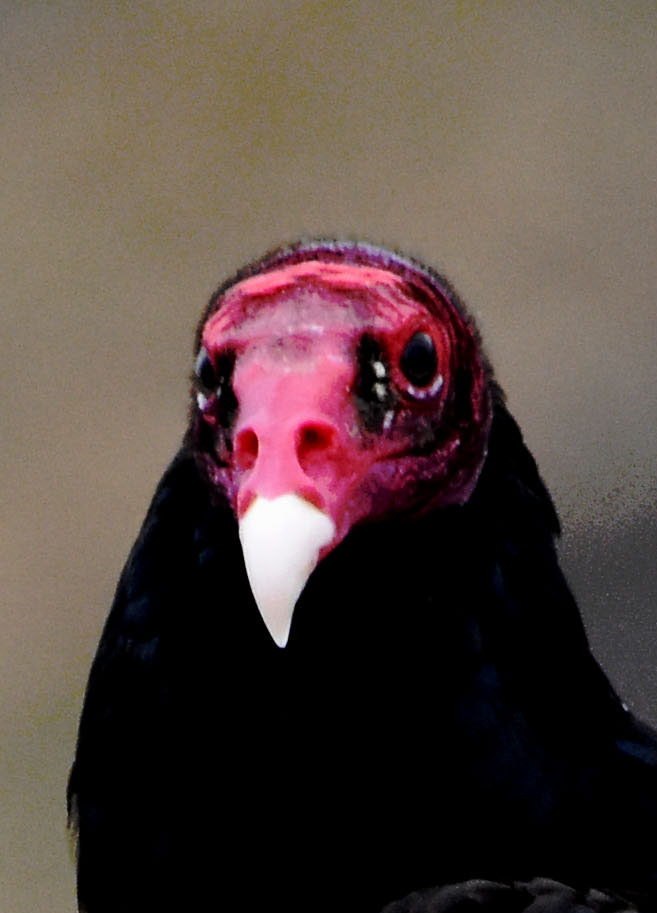
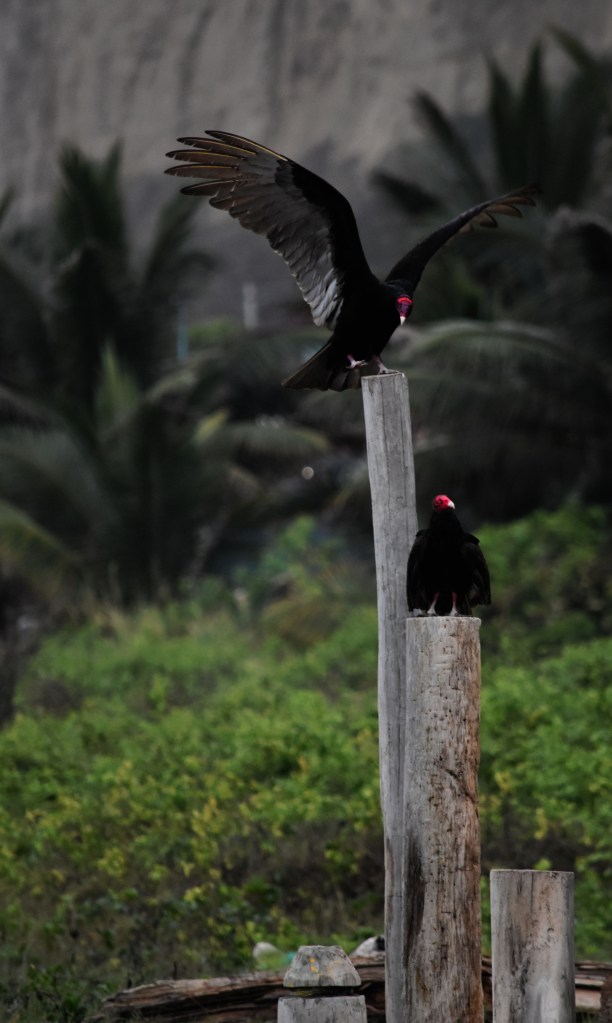
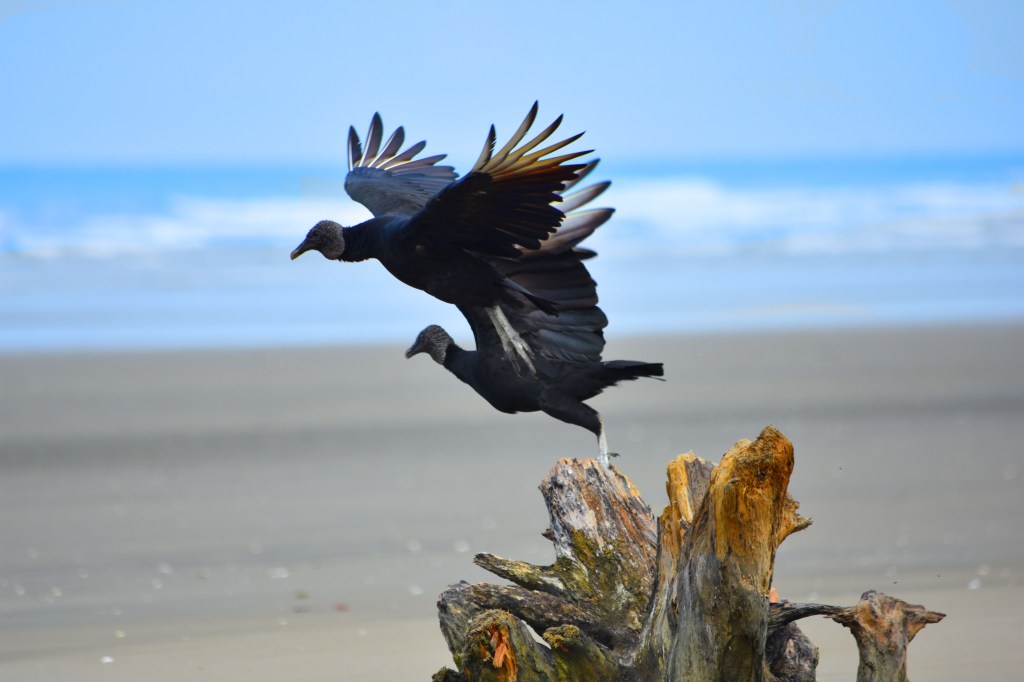
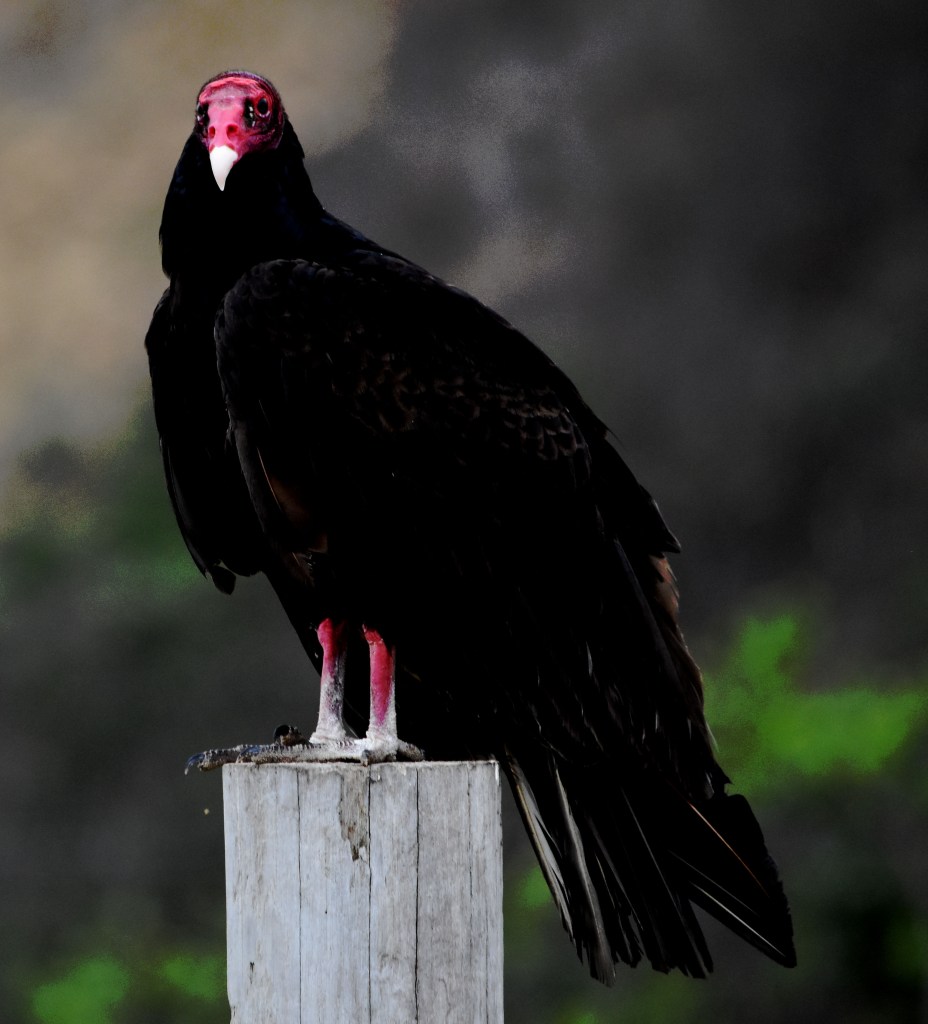
Turkey vultures are magnificent creatures. (I say that despite the perception of many that turkey vultures are nothing more than harbingers of death.) Prior to my part-time residence on the beaches here (which has afforded me daily interactions with these redheads) I thought of them as they were depicted in the 1950’s westerns. You know the scene – where the thirst-starved, horseless cowboy is dragging himself beneath the lifeless skeleton tree, leafed with 13 ravenous vultures. Great for movie cinematographers, but bad for the reputations of my innocent feathered friends. I’ll just say that intermingling with them has assisted me in forgoing my prejudices.
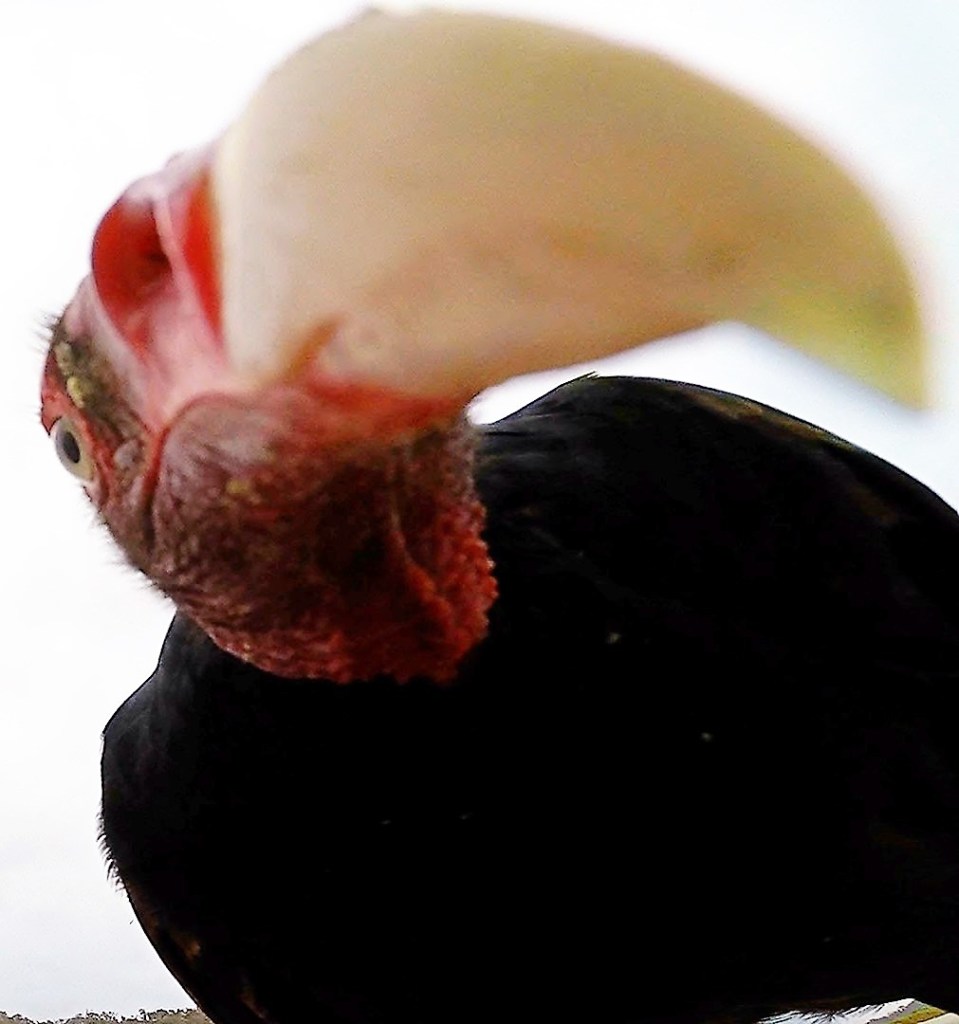
My eyes have been opened, and I have become mindful and appreciative of their gracefulness, their imperative purpose and even the beauty in those wrinkled, blood-red or black crowns.
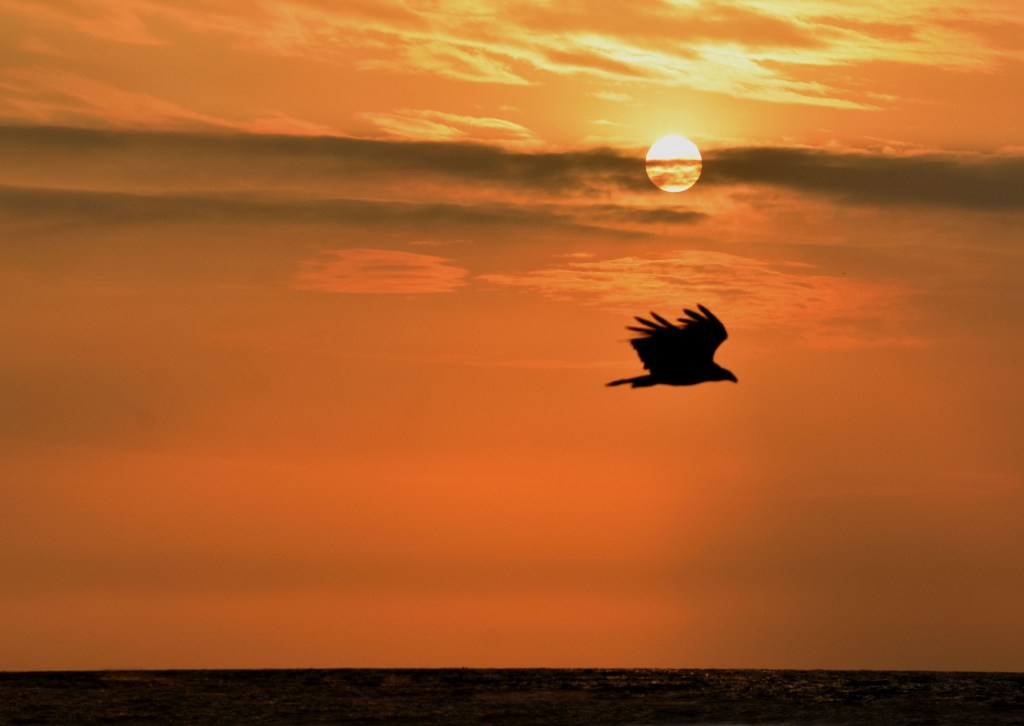
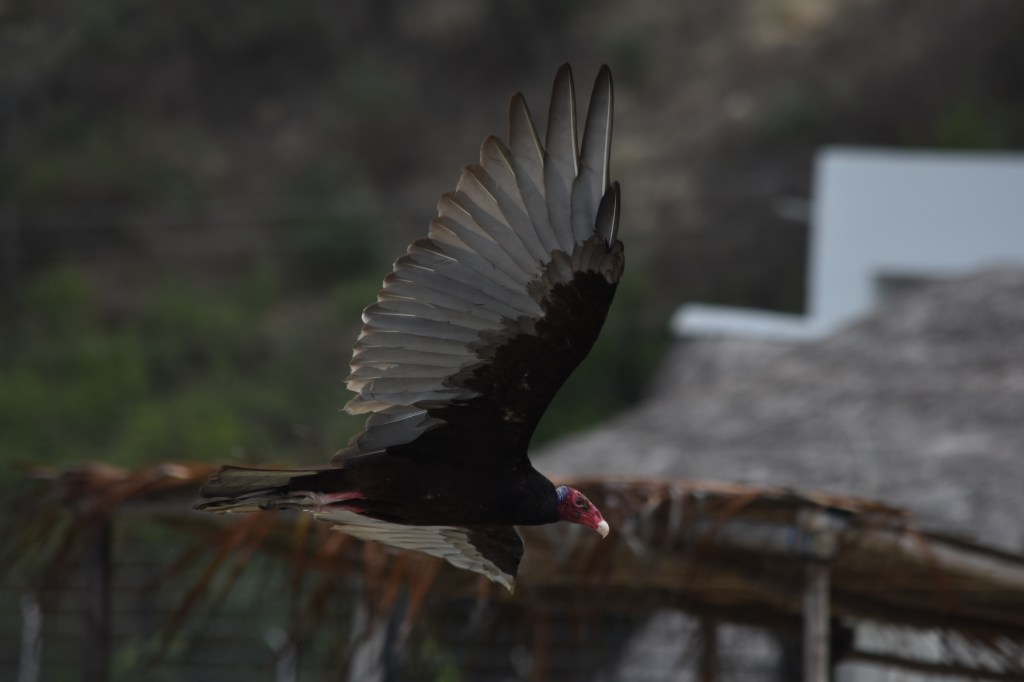
(Yes, I think they are beautiful.) As I witness their command of ascending flight as well as their gentle, somewhat sideways drift as their stretched-out talons prepare for touchdown, my spirit ascends as well.
I confess. I’ve spent far too many hours squatting or lying on Ecuador’s playas, camera perched on my left palm with my right pointer finger poised, patiently waiting for that illusive moment when a vulture spreads its 4 to 5 foot wing-span and lifts smoothly upon the ocean’s thermals away from the carnage.
In fact, I often can be seen by my fellow condo owners (who I am sure are shaking their heads in puzzlement) supine, gravity-weighted on the damp sand with buzzards effortlessly circling me, hoping I am carrion for the tasting. Crazy though my neighbors may think I am, I can tell you this: It is breath-taking, and I am in awe!
Well, that is, I am if I ignore the eyeless, shredded carcass left below. But that visual? (Or should I say victual?) Well, that is for my next post.
I’ve waited a long 2 years to return to the condo Jan and I own, built on the Pacific sands of Canoa, Ecuador, situated nearly smack dab on the equator in South America. Yes, I wanted to see our lovely home again, but the truth is, I was desperate to snatch up my surfboard and rip on the shoulders of Canoa’s waves. And today, my first time back in the waves in nearly a year, I surfed like I’ve never surfed before.
I mean this literally. I surfed like I‘ve “never” surfed before, and it is hard not to be completely discouraged.
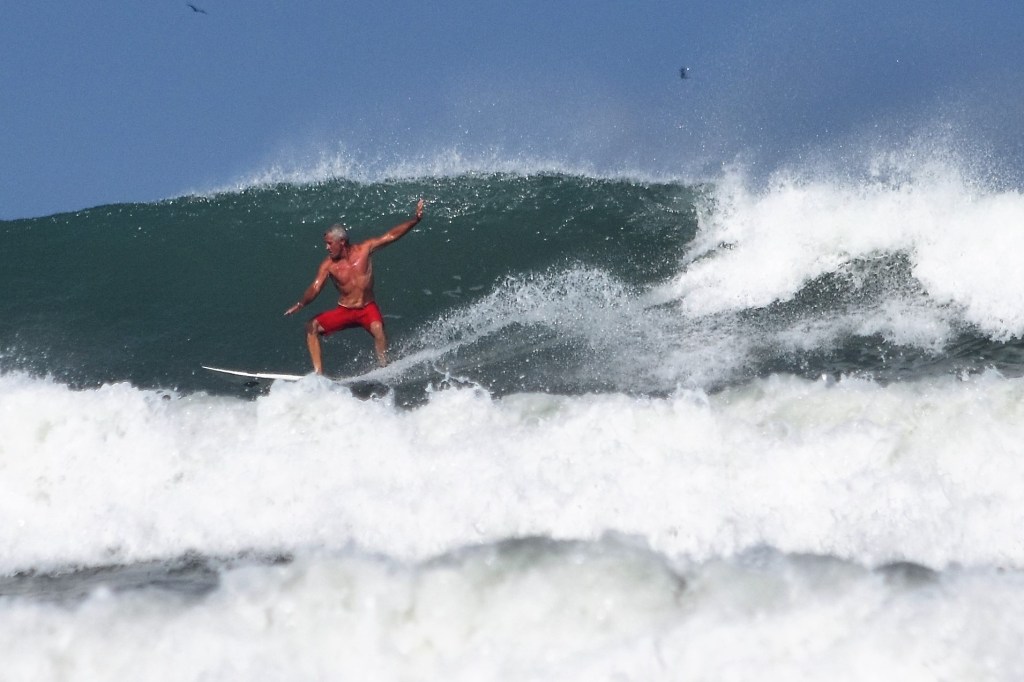
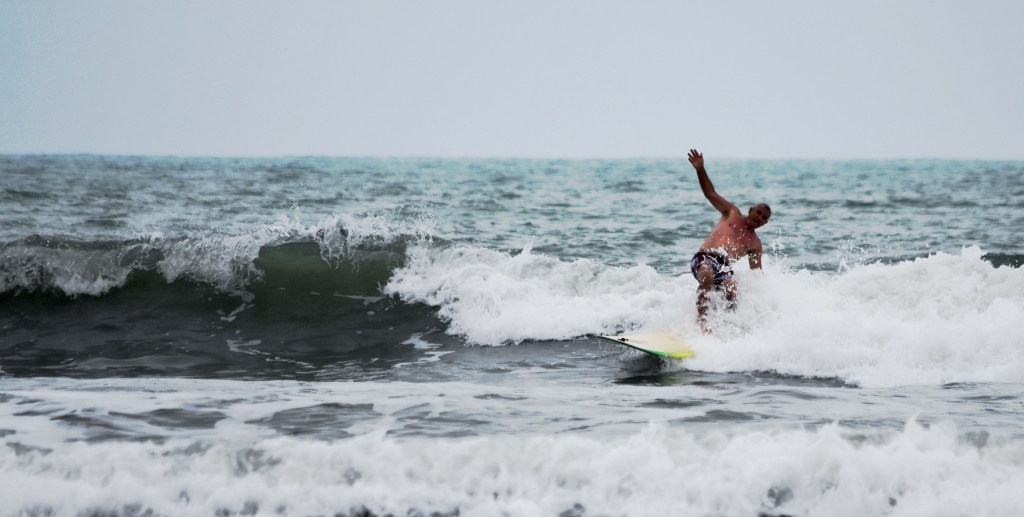
I went from surfing, as seen on the top pic, a year ago, to surfing as depicted on the second pic.
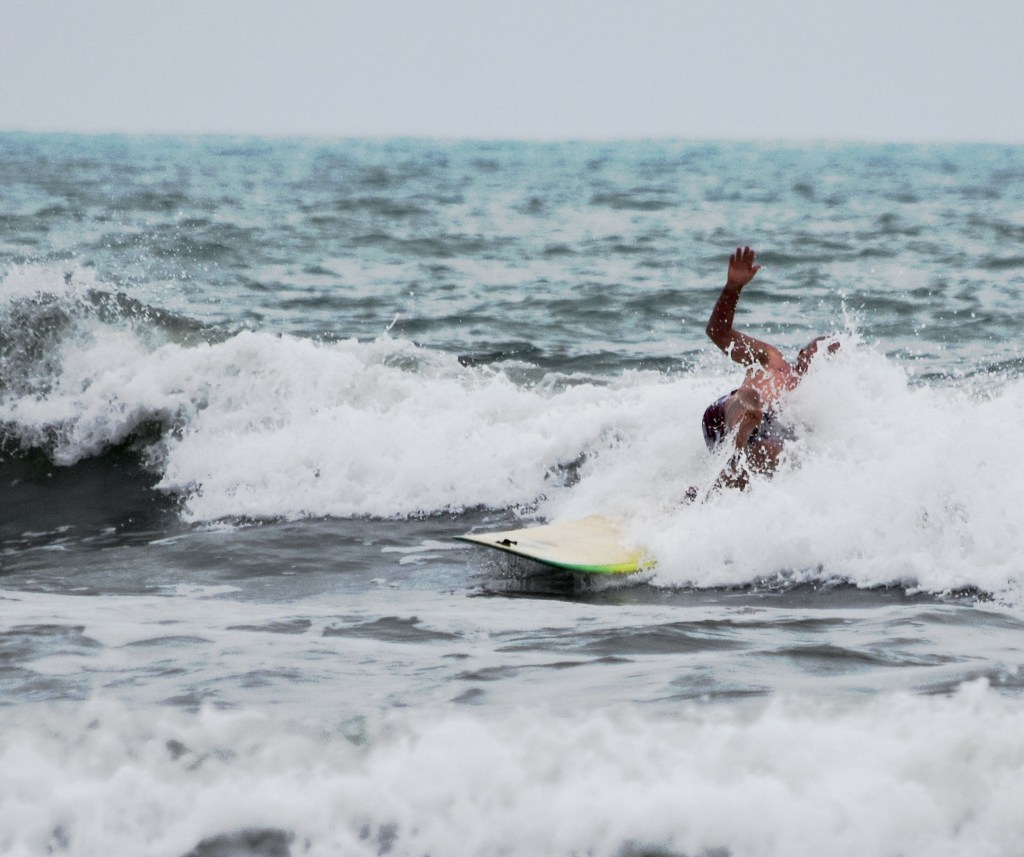
I know, I know – I guess after a major shoulder injury and the subsequent surgery and physical therapy, it’s to be expected that I’d have lost “some” strength and a little skill while gaining a pound or two. But I wasn’t at all prepared to find I barely had the strength to paddle, let alone pop up and stay on my feet. I’m sure the belly fat didn’t help one bit either.
And then, as if that wasn’t depressing enough, my feet couldn’t find my stick’s center gravity point, and I looked and felt about as graceful as a pirouetting elephant on a beach ball.
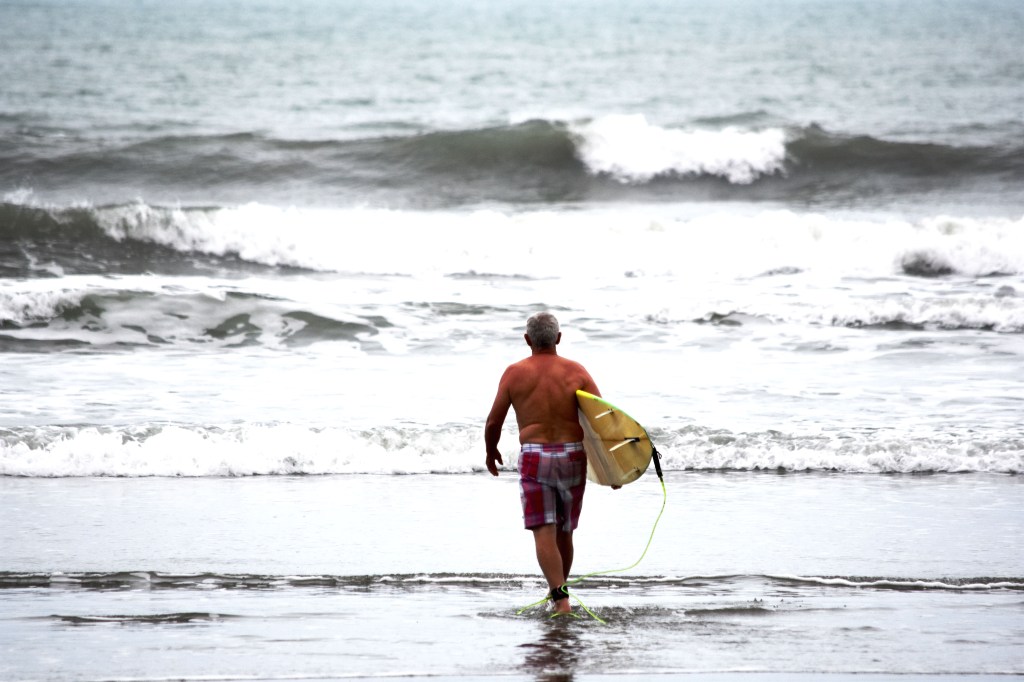
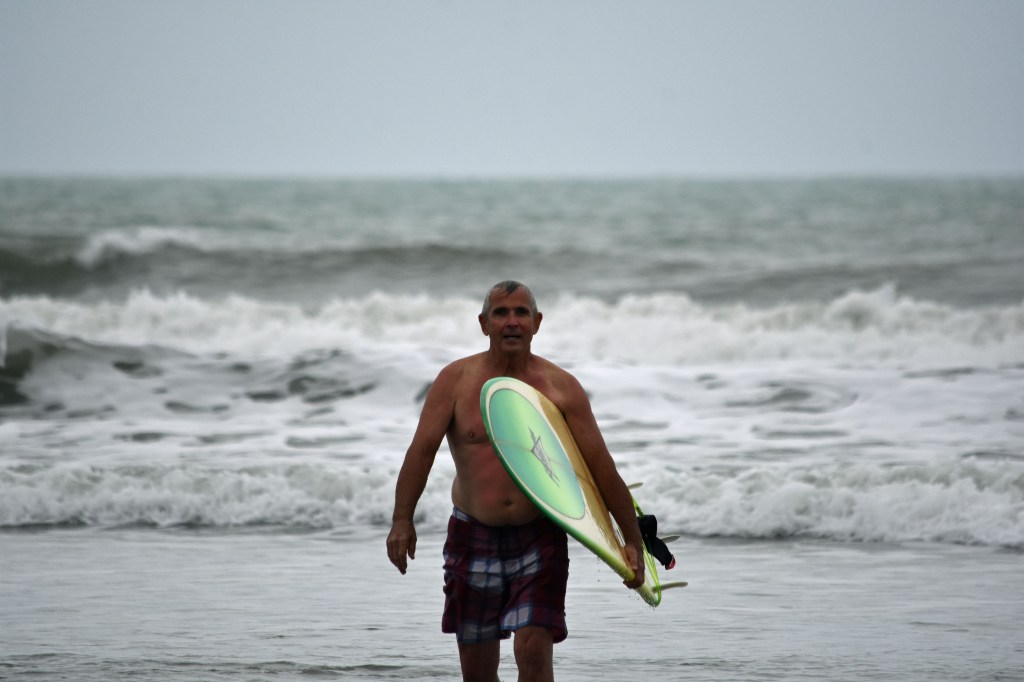
While walking back onto the shore, I realized that I needed to accept where I am currently, not where I was a year ago, and decide: “Do I love this sport deeply enough to start as if I’ve never surfed before?” An easy choice.
It is time to drown my pride (what little is left after today’s exhibition), and in the morning, pick up my surfboard, tuck it under my arm, walk into the shallows while sliding my feet to spook off stingrays and as the water deepens, confidently get back on my board, duck-dive my way to the outside and remind myself as I paddle for my next wave that I must rethink so I might rebuild, to regain what a year ago, I took for granted.




 Explorations of an Earlybird